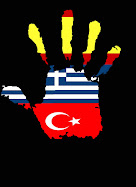
BIENVENIDA / WELCOME

Este blog es el instrumento de comunicación para todos los participantes en el Programa de Aprendizaje Permanente (P.A.P.) Comenius. Se trata de una asociación multilateral entre tres países: Turquía, Grecia y España. Nuestros centros educativos van a trabajar temas relacionados con la historia, las tradiciones, la religión, el ciclo festivo, etc. Y nuestro principal objetivo es estrechar los lazos que unen a estas tres culturas mediterráneas.

This blog is a communication tool for every participant in the Comenius Lifelong Learning Programme (L.L.P.). It is a multilateral association of schools in these three countries: Turkey, Greece and Spain. We are going to deal with subjects such as History, Traditions, Religion, The Festive Cycle, etc. And our main objective is to approach the similarities which these three Mediterranean cultures have.
Mostrando entradas con la etiqueta CURIOSIDADES / CURIOSITIES. Mostrar todas las entradas

martes, 3 de junio de 2008

De lord Byron a Mary Shelley / From Byron to Shelley

Thomas Phillips, "Lord Byron con traje albanés"

En el verano de 1816, Byron residía en Villa Diodati en Ginebra con unos amigos y en una tarde lluviosa les propuso un reto: inventar una historia de terror. Los amigos del poeta eran Percy Shelley, también poeta y pareja de Mary Shelley, John Polidori y Claire Clairmont. Como resultado de este juego literario nacieron dos de los más famosos mitos románticos de la literatura de terror y ciencia-ficción: Frankenstein de Mary Shelley y el conde Drácula de Polidori.

¡Qué curioso! Hemos encontrado un enlace entre los dos blogs de nuestro Instituto: el del Comenius y el de Leo Frankenstein. De la historia de Grecia hemos llegado a lord Byron y de éste a Mary Shelley. Sigamos tendiendo puentes entre la historia, la cultura y la geografía, a ver qué nos depara el Comenius.


Thomas Phillips, “Lord Byron in an Albanian dress”
In the summer of 2816, Byron lived in Villa Diodati, in Geneva, with some friends, and on a rainy evening he challenged them to make up a terror story. His friends there were Mary Shelley, her couple, the poet Percy Shelley, John Polidori and Claire Clairmont. As a result of this literary game, two of the most famous literary myths of terror and science fiction literature were born: Mary Shelley’s Frankenstein and Polidori’s Dracula.

How surprising! We have found a link between our high school`s two blogs: the Comenius and the Frankenstein`s ones. From the History of Greece we have arrived to Lord Byron and from him to Mary Shelley. Let`s go on building bridges among History, culture and geography and will know where the Comenius takes us.

English...

¿Sabías que... / Did you know that...


El significado de Hispania (término de origen fenicio) era “tierra de conejos”. Los romanos tomaron este término de los cartagineses y lo utilizaron porque en España abundaban ese tipo de roedores. Otros opinan que el término viene de Hispalis (ciudad de occidente) que denominaba a la actual Sevilla y que por extensión se aplicó a todo el territorio.

El otro término que se ha usado para designar a la península ibérica, Iberia, es de origen griego y también se usa para nombrar a un pueblo prerromano cuya cultura tuvo gran importancia en nuestra historia, los iberos, especialmente en la zona del Levante. El pueblo ibero ha dejado muchos vestigios de su paso por la zona que habitamos. Casualmente el nombre de nuestro instituto está tomado de un antiguo yacimiento arqueológico que existe en la zona: El Monastil.


That the meaning of Hispania (of Phoenician origin) was rabbit land?
The Romans took the word from the Carthaginians and used it because there were many of them in Spain. Others say that the name comes from Hispalis (town in the west), which was ythe name of the present Seville, and it was later used extensively for the whole country.

The other term used to name the Iberian peninsula, Iberia, comes from Greek and it is also used to call a prerroman culture which had a great importance in our history, the Iberians, especially in the eastern part. The Iberian culture has left important remains from the time they were here. By chance, the name of our high school comes from an ancient archaeological site in the area: The Monastil.

English...

domingo, 25 de mayo de 2008

¿Sabías que.../ Did you know that...

San Antón, el patrón de la Fiestas de Moros y Cristianos de Elda, nació en Coma, Egipto, en el siglo III y aunque pertenecía a una rica familia, vendió sus pertenencias, repartió el dinero entre los pobres, y se marchó a vivir en soledad, a un humilde refugio cerca del Nilo con la única compañía de los animales (de ahí que se le considere su protector)?
"Si quieres ser perfecto, ve y vende todo lo que tienes y dalo a los pobres" (Son las palabras de Jesús que escuchó San Antonio Abad).


Did you know that Saint Anthony, the Patron Saint of Elda's Moors and Christians Festivities ...

was born in the town of Coma, Egypt, in the 3rd century AD and despite of descending from a wealthy family, he decided to sell his properties, give the money to the poor and live in a simple lodge on his own by the Nile with the only company of animals ( and that's why now he is considered to be a holy protector of them) ?

English...

jueves, 8 de mayo de 2008

¿Sabías que... / Did you know that...?

Congreso de los Diputados en Madrid

...que a los leones que presiden la entrada al Congreso de los Diputados se les llama Daoíz y Velarde en honor a los capitanes que dieron su vida el 2 de mayo de 1808 entregando armas al pueblo en su lucha contra los franceses?


The lions standing at the main entrance to the Congress building in Madrid are called Daoíz and Velarde, to honour the captains who died on May 2nd, 1808 providing the civil people with weapons in their war against the French?

English...