


La jornada de tolerancia la celebramos el pasado miércoles 3 de noviembre. Participaron todos los alumnos de 3º y 4º de ESO, 2º de PCPI Bachillerato y Turismo. La actividad comenzó a las 11 de la mañana con actividades audiovisuales, la elaboración y la autocorrección del test. Después todos los grupos se reunieron en el patio para tomar un almuerzo conjunto y por último realizamos un Ágora (foro de opinión) en el Salón de Actos. Como recuerdo de la actividad se repartieron alfombritas de sobremesa y pulseras a todos los participantes.
Los resultados del test fueron muy satisfactorios. La mayoría de los alumnos que lo hicieron demostraron conocer bien su grado de tolerancia ya que antes de realizar el test se les pedía una valoración personal entre 0 (nada tolerante) y 150 (totalmente tolerante) y, tras realizar el test, la mayoría tuvo una diferencia con la puntuación obtenida de 15 puntos o menos. La mayor parte de las puntuaciones quedaron entre los 100 y 130 puntos.
Estos resultados fueron presentados en las jornadas de clausura del proyecto, celebradas durante los días 25 y 26 de noviembre en Sofía, la capital de Bulgaria, con representación de nuestro instituto. Allí acudieron estudiantes de varios centros educativos Búlgaros que participaron en un ágora conjunta con todos los socios del proyecto. El encuentro terminó con la presentación de la mencionada nueva página web sobre la tolerancia: www.tolerancetest.eu, que permitirá a todos los jóvenes europeos realizar el test y opinar sobre cuestiones relacionadas con la Tolerancia en cinco idiomas (español, portugués, holandés, búlgaro e inglés). En esto nosotros hemos sido los primeros.
We celebrated a Day dedicated to Tolerance on Wednesday the 3rd of November. It Involved all students from the age of 15 (3rd and 4th of ESO, 2nd PCPI, Bachillerato and Tourism Vocational Studies). The activity began at 11 am with a warm up including some dynamic and audiovisual activities. Later they took the test and were given the keys for a self-correction. After that, all the groups met in the playground for a follow-up, shared lunch and finally took part in an Agora meeting (an opinion forum) at the School Hall. As a participation gift all students got mousepads, ball-pens and wristbands.
The test results were very satisfactory. Most students showed a good knowledge of their own degree of tolerance since in the introduction to the test they were asked to give a number from 0 (completely intolerant) to 150 (fully tolerant) according to the perception of their own position on the subject, and, once having taken the test, the majority of them had a difference with the score of 15 points or less. Most of the scores were between 100 and 130 points.
The E-Tolerance Test project was closed on November the 25th and 26th in a conference that took place in Sofia, the capital of Bulgaria, with a representative from our school. A large number of teenage and young adult Bulgarian students attended and took part in this closing meeting. It ended with the presentation of the new website on tolerance: www.tolerancetest.eu, which will enable all young Europeans to take the test, check their score and comment on issues of tolerance in five languages (Spanish, Portuguese, Dutch, Bulgarian and English). And, on doing that, we have indeed been the lucky first ones.
jueves, 6 de enero de 2011
JORNADA DE TOLERANCIA Y ÁGORA EN EL IES MONASTIL/ CELEBRATION OF THE TOLERANCE DAY AND THE AGORA IN THE IES MONASTIL

miércoles, 22 de abril de 2009
Pega tu hoja en el árbol interactivo de Anna Frank / Stick your leaf on Anna Frank's interactive tree

Se trata de un sitio en seis idiomas, que ofrece al público una plataforma para expresar su afinidad con Anna Frank y su ideario. Anna Frank simboliza para mucha gente la esperanza de un mundo mejor, en el que todos se respeten y convivan en libertad, independientemente de su procedencia, religión o convicciones políticas. El elemento central del sitio web es el castaño que Ana Frank veía desde la ventana del desván de la casa de atrás.
Our bloggers suggest we should inform you of the possibility of showing your support to Anna Frank`s way of thinking and ideology in the following web site: http://www.annefranktree.com/
It is a six language web site which offers the public a platform to express their support to Anna Frank`s ideals. She symbolizes for many people the hope for a better world where everybody is respected and can coexist peacefully and freely regardless of their procedence, religion or political ideas. The central element in the web site is the chestnut tree she could see at their neighbours house form her window.
domingo, 8 de febrero de 2009
Música para la paz: "Jerusalén, la ciudad de las dos paces" / Music for peace: "Jerusalem, the two peaces city: both heavenly and earthly peace"

El trabajo de Savall no se limita a ser una exhaustiva publicación literaria de 400 páginas publicada en ocho idiomas, sino que incluye dos discos en los que se evocan momentos históricos esenciales de la música. En el proyecto han participado músicos de España, Francia, Reino Unido, Bélgica y Grecia e intérpretes judíos y palestinos de Israel, Irak, Armenia, Turquía, Marruecos y Siria.
El título del trabajo alude a la etimología que explica el nombre de la ciudad de Jerusalén, traducido del hebreo como “ciudad de las dos paces”, para hacer referencia metafórica a “la paz celestial” y a “la paz terrenal”.
La selección musical se abre y se cierra, muy acertadamente, con “las trompetas de Jericó”, simbolizando esos muros que nos separan en el mundo actual y que sólo la música es capaz de derruir. Sin duda, como ha dicho Savall la paz terrestre es “una esperanza y un deber” en esta “locura absoluta” que estamos viviendo.
The Catalonian voila player and musicologist Jordi Savall has just issued a book after having been entrusted an ambitious project to promote intercultural dialogue among the three main monotheist religions: Judaism, Christianity and Islam. As European ambassador of intercultural dialogue, he has tried to reflect in his work that music, apart from collecting the thousand-year-old cultural tradition in the Mediterranean countries, is also a powerful tool to solve conflicts and set the basis of a pacific coexistence in periods of tension and war.
Savall`s work is not only an exhaustive literary production of 400 pages written in eight languages, since it also contains two Cds in which the most essential historical moments of music are included, and musicians from Spain, France, The United Kingdom, Belgium, Greece and some Jew and Palestine performers from Israel, Iraq, Armenia, Turkey, Morocco and Syria have taken part in it.
Its title recalls the Etymology which explains that the name of the city of Jerusalem comes from Hebrew, meaning “the two peaces city” a metaphoric reference to both heavenly and earthly peace.
This music collection starts and finishes very accurately with “The trumpets from Jerico”. It symbolizes the separation walls in the nowadays world which only music is capable of pulling down. No doubt, as Savall said, earthly peace is both “hope and duty” in this “overall madness” we live in.
domingo, 18 de enero de 2009
Un mundo sin complejos y sin prejuicios es posible/ A world without complexes and prejudices is possible

Los estudios realizados por la doctora Silke demuestran que el cerebro está preparado para identificar a personas de otra raza en cuestión de milisegundos. Desde el punto de vista neurológico ésta es la razón de que sintamos miedo hacia lo diferente o lo desconocido. Es una cuestión de supervivencia, el miedo nos ayuda a desconfiar y a detectar situaciones de peligro, pero este miedo se puede desaprender.
“Es importante que la gente entienda que es muy natural sentirse incómodo con otras personas que son muy distintas de uno mismo. Pero también es cierto que esto puede cambiarse”. La mejor receta para luchar contra los estereotipos sociales, como el miedo al inmigrante, es trabajar la interacción social tanto a nivel educativo como laboral.
La segregación existente en muchos barrios se debe a que la población autóctona no llega a interaccionar con la población extranjera o inmigrante. Es natural que al principio la gente se sienta incómoda, dice Fiske, pero los gobiernos deben ser capaces de gestionarlo para crear un entorno seguro y constructivo, porque en caso contrario habrá violencia y la gente se sentirá amenazada.
En este blog dedicado a eliminar barreras y prejuicios y a trabajar por la tolerancia no sabemos si alegrarnos de saber que los científicos han localizado la causa del prejuicio social en la zona de la amígdala del cerebro (nos recuerda a la teoría de la Frenología que en el siglo XIX pretendía relacionar las conductas criminales con la forma del cerebro); de lo que sí estamos seguros es de que la multiculturalidad es un hecho innegable de la sociedad actual y de que ha llegado la hora del cambio. Quizá, y aunque sea sólo un símbolo, el hecho de que el próximo martes un negro asuma la presidencia de los EEUU es todo un dato positivo del cambio. Pero es que, además, este hombre tiene como segundo nombre Husein. El día de la investidura, como es tradición, utilizará los dos nombres porque, según él, el mundo está preparado para este mensaje. Confiemos en que así sea.
That is what the psychologist Susan Fiske, from Princeton University, said in her recent visit to Barcelona, where she lectured about values, empathy and social barriers from the neurocognitive perspective. She said that the world is not a neutral place; but if we try to work for diversity and tolerance, the change in habits and behaviour can be promoted through education.
Dr. Silke confirms that our brain is prepared to identify other people as belonging to a different race in the thousandth part of a second. Neurologically, that is why we fear what is different or unknown. It is a matter of survival. Fear helps us to distrust and detect risk, but this fear can be avoided.
“It is important for people to know that it is natural to feel uncomfortable with people very different from ourselves. But it is also true that this can be changed.” The best recipe to fight against social stereotypes, such as the fear towards immigrants, is to work in social interaction either at work or in education.
There is segregation in a lot of districts because native people do not mix with strangers. It is natural that at first people feel uncomfortable, says Fiske, but governments must be able to create a safe and constructive atmosphere, because otherwise there will be violence and people will feel threatened.
In this blog dedicated to stop barriers and prejudices and work for the sake of tolerance, we are not sure whether to be happy, or not, of getting to know that scientists have located the cause for social prejucide in the brain tonsil (It makes us remember a 19th century theory which linked criminal behaviour to the brain shape); however, we are certain that multiculture is a fact nowadays and that time for it has come. Perhaps, that a black man becomes the US President next Tuesday is a proof of this change. Furthermore, his second name is Husein. For the investiture, as it always happens, he will use both names because, in his words, the world is ready for the message. Let`s give it a chance.
martes, 9 de diciembre de 2008
Música para la Tolerancia / Music for Tolerance
Durante los días previos a la celebración del Día Internacional de la Tolerancia pudimos disfrutar de una excelente selección de músicas del mundo, que amenizó nuestros cambios de hora y períodos de recreo y que nos permitió realizar un viaje musical a través del mundo.
Comenzamos nuestro viaje en el Magreb, con la poderosa música raï; este género musical, nacido en Argelia a principios del siglo XX, llega a Francia en los 90 y a partir de ahí se populariza en toda Europa y el resto del mundo, fusionándose con otros géneros como el reaggae, el pop, el jazz,… Algunos de los autores más conocidos, y los que hemos tenido la oportunidad de escuchar estos días son el maestro Khaled y Cheb Mami. De Argelia nos desplazamos hasta Senegal con la sugerente voz de Ismael-Lô, conocido en nuestro país sobre todo por haber participado en la banda sonora de alguna película de Pedro Almodóvar. De allí a Cabo Verde nos trasladó la diva de los pies descalzos, Cesaria Evora, ganadora en 2004 del Grammy al mejor disco de World Music. Los Tribalistas, grupo del que formó parte Carlinhos Brown, nos ofrecieron la música que hoy se hace en Brasil, alejada de tópicos sin renunciar al inmenso bagaje de la bossa nova. Y de Brasil nos fuimos a Méjico a compartir la nueva ranchera de Lila Downs, para acabar nuestro viaje en Cuba con lo mejor del son y el jazz cubano: el legendario Trío Matamoros, Benny Moré, Pérez Prado, Paquito de Rivera, Chucho Valdés… Como colofón a este viaje musical pudimos disfrutar de la música en directo de Habib, el gitano de Argel, acompañado a la percusión por un alumno del centro.


In the previous days to the celebration of the International Day of Tolerance we could listen to an excellent selection of music from different places in the world which enlivened the periods between lessons and break time allowing us to make a musical trip around the planet.
We started our travel in the Maghreb with the powerful raï sounds. This musical genre started in Argelia at the beginning of the 20th century, arrived in France in the 90s and from there spread into the whole of Europe and the rest of the world merging with other tendencies such as reaggae, por jazz,... Some of the most well-known musicians we were able to listen to these days are master Khaled and Cheb Mami.
From Argelia we moved to Senegal, with the suggestive voice of Ismael-Lô, famous in our country for having taken part in some sound tracks in several Pedro Almodovar`s films.
Then we flew to Cabo Verde, birthplace of the barefoot prima donna Cesaria Evora, awarded in 2004 with the best World Music Grammy.
Los Tribalistas, band in which Carlinhos Brown played, offered us the present day Brazilian music, far away from easy topics without getting apart from the long and wide wealth of Bossa Nova.
From Brazil we went on to Mexico to share the new rancheras by Lila Downs and finished our trip in Cuba with the best Cuban rhythms and jazz: the legendary Trío Matamoros, Benny Moré, Pérez Prado, Paquito de Rivera, Chucho Valdés... As a final top for this musical journey, we had the opportunity to enjoy the live concert by Habib, the gypsy from Argel, accompanied at the drums by one of our students.
sábado, 29 de noviembre de 2008
Interpretando el Guernica de Picasso

Para la celebración del DÍA de la TOLERANCIA, los alumnos y alumnas de 3º B de ESO del IES MONASTIL, han elaborado una obra plástica de gran formato (213X113 cm).
El trabajo, dirigido por la profesora María Gosalbes, se ha llevado a cabo entre el 16 de octubre y el 13 de noviembre en el aula-taller de EPV; Se trata de una actividad que se enmarca en el tratamiento transversal de la Educación para la Paz, planteada desde del ámbito de la Educación Plástica y visual.
En primer lugar se ha analizado esta obra de Picasso, de la que existe una muy buena reproducción en el centro. Teniendo en cuenta que es el retrato de los horrores de la Guerra Civil bajo el prisma de Picasso, se plantea a los alumnos y alumnas la realización de una interpretación, dando una vuelta de tuerca que transforme el desastre, el caos, el drama, el miedo, etc. en lo contrario, defendiendo el poder de cambiar el mundo desde la cultura, la paz, la democracia…
Por equipos han abordado cada elemento - personaje – de la obra, realizando los bocetos con las ideas de cambios oportunas.
Se han trabajado los rostros y parte de los personajes con collage, componiendo caras picasianas, pero a color, y buscando las expresiones contrarias al original.
Hemos montado la composición basándonos en el referente, y sobre ella hemos dado los acabados pictóricos adecuados para aglutinar dibujo, collage y color.
¿Qué ha supuesto esta interpretación para los alumnos y alumnas? 
Es destacable el logro del joven que está sentado leyendo un libro, porque es el personaje paralelo al combatiente herido: Cambiando armas por libros, hacemos revivir a un soldado muerto en el bombardeo. Además le hemos vestido de rayas, en claro homenaje a Picasso.
También se puede hacer una referencia similar al personaje de la madre con su hijo en brazos, o a la mujer que corre. La madre es ahora símbolo de vida y continuidad. La mujer que corre lleva los pinceles que dan color al caballo, o sea que protagoniza y abandera el cambio a un mundo mejor.
Con esta actividad se ha conseguido conocer un poco más la obra original, Guernica, de Picasso, y lograr una interpretación plástica antagónica; fomentando el trabajo en equipo, y valorando la necesidad de una convivencia en paz, para la que es fundamental la TOLERANCIA.
Our Version of Picasso`s Guernica
To celebrate the International Day of Tolerance, the students in the 3rd year group B at the I. E. S. Monastil, made a 213x113 cm big plastic display.
The work was directed by the arts teacher María Gosalbes and was done from October the 16th to November the 13th at our high school arts workshop. It is an activity within the new teaching legal frame in which values such as Education for Peace are included in the programming of every academic subject, in this case Plastic and Visual Education.
Firstly, they analysed the Guernica, of which there is a very good reproduction at our school. Then, considering it represents the Civil War horrors seen by Picasso, the students were told to make a new version which transforms disaster, chaos, drama, fear etc. into the contrary, supporting the power of change through culture, peace and democracy.
They have made each element in work teams making previous sketches with their ideas and later changing what was agreed to.
Faces and part of the bodies have been composed using the technique of collage, colourful Picassian faces showing happiness, contrasting the referent Guernika.
The whole composition has been based on the original, including pictorial touches to bind together drawing, collage and colour.
What has this interpretation meant to our students?
“It is remarkable to observe a sitting youngster reading a book, because he is a parallel character to the wounded combatant: using books instead of weapons we return to life the soldier shot in the battle. Furthermore, he is wearing striped clothes, a clear homage to Picasso.“
We can also make the same comment about the mother holding her child and the other woman running. “The mother is now a symbol of life and continuation. The running woman is holding the brushes which colour the horse, leading the change towards a better world.”
With this activity we have come to know Picasso`s work closer and have been able to do an opposed plastic version. We have also promoted team`s work and valued the necessity of a peaceful atmosphere, for which TOLERANCE is essential.
martes, 25 de noviembre de 2008
Feria Solidaria / Solidarity Fair


En las fotos podéis ver imágenes de la Feria Solidaria que se celebró el pasado 20 de noviembre en nuestro instituto para conmemorar el Día Internacional de la Tolerancia. Como se puede observar consistió en montar una serie de puestecillos en los que se exhibían productos típicos de diferentes países. Los alumnos extranjeros del instituto colaboraron trayendo de sus casas vestidos, cerámica, productos gastronómicos, platos cocinados, banderas, vídeos, fotos, murales, mapas y otras curiosidades que, colocadas a modo de escaparate, daban la sensación de estar en un lugar sin fronteras, cosmopolita y multicultural, donde la autenticidad, lo propio, lo diferente tenía cabida en un gran puzzle multicolor.
La Feria tuvo muchísimo éxito entre nuestros alumnos que se lo pasaron en grande y hasta recibimos la visita de un grupo de alumnos de La Melva. No faltaron tampoco los medios de comunicación que se hicieron eco del evento en diferentes programas. Y, ¡cómo no!, hasta contamos con la presencia del Concejal de Educación y la Concejala de Solidaridad que amablemente acudieron a las inauguración.
Entre las colaboraciones externas, contamos con la participación de los representantes del Comercio Justo en Elda, que nos mostraron sus productos y nos explicaron cómo se puede ser solidario a través de la compra de estos productos.
Destacar también la colaboración de los alumnos del Ciclo de Turismo que, ataviados de trajes típicos, desempeñaron de maravilla su trabajo de asesores turísticos en los stands dedicados a México, Grecia y Turquía. También demostraron una gran implicación los alumnos de 1º de Bachiller que se encargaron de representar a España, Reino Unido e Italia.
Como fin de fiesta, después de los talleres, entre los cuales había uno de henna que tuvo mucha afluencia, pudimos asistir a un concierto muy especial en el que el artista invitado, Habib, el gitano de Argel, supo crear con su talento musical un ambiente mágico que contagiaba alegría y “buen rollito”.
Tan satisfechos hemos quedado que pensamos repetir la experiencia el próximo curso.
We have included some images of the Solidarity Fair we celebrated at our school last Thursday, november 20th to commemorate the International Day of Tolerance. We set a number of market stalls in which we showed typical products from different countries. The foreign students in our school brought either garments, pottery, typical food, ready-made recipes, flags, videos, photos, wall displays, maps and other curiosities which were exhibited in such a way that we were transported to a borderless place, authentic, global and multicultural where the nearby products, as well as the far away ones, were reunited in a colourful puzzle.
The Fair was a complete success. Our students enjoyed a lot and we were even visited by the close IES La Melva. The Education and Solidarity Town Councillors kindly presided its opening and the local radio stations, newspapers and TV channels also came to broadcast the event.
Among the external collaborations, one of the stalls was set by representatives of the Fair Trade Local Charity which displayed their products and explained us how to help needed people by getting some of their items.
We were helped by the students in our Touristic Marketing Professional Course, who dressed typical costumes and did an splendid work as touristic agents in the stands dedicated to Mexico, Greece and Turkey. The students in the 1st year of Bac also helped in the stands representing Spain, the United Kingdom and Italy.
Among the different workshops, there was a very crowded one in which you could be drawn a surface tattoo.Once they finished their activity, as a closing, there was a very special concert by Habib, an Arab gypsy musician. He had a great musical talent and we were all wrapped up in a magic atmosphere transmitting us sudden merriment.
So delighted we were that we will probably have a second edition next year.
jueves, 13 de noviembre de 2008
Manifesto about Tolerance

Tolerance is the subject which names our project and which links all the activities we have done so far. Our purpose is to get advantage of both, differences and similarities, and improve personally and professionally so that our students can benefit as much as possible from this enrichment.
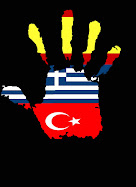
Today, November the 16th 2008, Greeks, Turkish and Spaniards are celebrating the International Day of Tolerance in our 4th meeting, and here, as representatives of our three educative communities, we commit ourselves to work and behave favouring tolerant attitudes and actions.
Istambul, November the 16th 2008.-
viernes, 31 de octubre de 2008
¿Sabías que... / Did you know that...
Jean Michel Jarre fue nombrado en 1993 Embajador de Buena Voluntad para la Tolerancia y la Juventud de la UNESCO?
Comienza así la actividad política de Jarre, en defensa de los derechos universales del hombre, participando en foros y continuando con la realización de megaconciertos en sitios considerados por UNESCO como patrimonio de la humanidad.
Entre los momentos más memorables de su labor como Embajador de Buena Voluntad figuran el Concierto para la Tolerancia que ofreció al pie de la Torre Eiffel, en París, coincidiendo con el cincuentenario de la UNESCO. Para esa ocasión compuso además un tema sobre la tolerancia. Más recientemente, dio también un recital, el Concierto del Milenio, ante las pirámides de Egipto. Infatigable promotor de los derechos y de la educación de la juventud, es un auténtico mensajero de la tolerancia, del pluralismo cultural y del respeto para todos los jóvenes del mundo.
Pionero y estrella reconocida de la música electro-acústica, sus macroconciertos, que combinan alta tecnología sonora, láser y espectáculos pirotécnicos, congregan a decenas de miles de espectadores.
Jean Mitchel Jarre was made Goodwill Embassador in 1993 on behalf of Tolerance and Youth for the UNESCO?
That is the way in which Jarre`s political activity starts for the benefit of the universal rights of people, taking part in meetings and performing mass concerts in places considered by the UNESCO as part of humankind`s heritage.
The concert he offered for tolerance in Paris, at the very foot of the Eiffel Tower, in the 50th anniversary of the UNESCO is among the best remembered moments of his work as Goodwill Ambassador. He composed a piece about tolerance especially for the occasion. More recently, he did another performance, the Millenium Concert, in front of the Egyptian Pyramids. Tireless supporter of the rights and education of Youth, he is a real messenger of tolerance, plural culture and respect for every youngster in the world.
As a pioneer and well-known star of electro-acoustic music, his mass concerts, which combine high sound and laser technology as well as other effects as fireworks, always gather thousands and thousands of followers.
martes, 28 de octubre de 2008
Himnos por la paz / Hymns for peace
La música ha sido siempre una potente herramienta para transmitir sentimientos y su lenguaje universal al servicio de los ideales de algunos artistas comprometidos con los problemas sociales de su tiempo ha llegado a millones de personas de todo el mundo sin distinción de idiomas, religiones o razas.
Todos podemos recordar bellísimas canciones que consiguen emocionarnos cada vez que las escuchamos. Algunas alcanzan la categoría de "Himnos por la paz", como Imagine de John Lennon, o Blowin in the wind de Bob Dylan.
Los autores de este blog solicitamos vuestra colaboración para encontrar la canción que mejor sirva para transmitir el ideal de tolerancia por el que luchamos en nuestra Asociación Comenius. Nosotros proponemos una de Rosario Flores, mejor dicho el autor es Antonio, su hermano, pero recientemente es Rosario la que la ha reeditado en su último álbum, con bastante éxito, por cierto. Nos referimos a No dudaría.
Si os apetece escuchar la canción a la vez que oís la letra y véis un videoclip con imágenes sobre la pobreza y la guerra pinchad aquí. Y si queréis leer la letra en inglés hacedlo donde pone English.
Y para que no nos tilden de partidistas por promocionar lo nuestro, ahí va otro vídeo de una canción de moda que habla también sobre el deseo de poder y sobre la guerra. La mítica banda Coldplay nos ha dado toda una lección de solvencia tanto en la música como en la letra de la canción Viva la vida. Pero lo que más nos gusta es el videoclip. A ver si adivináis el famoso cuadro sobre el que está inspirado.
Music has always been a powerful tool to transmit feelings and its worldwide language has always meant a way of expression for the ideals of artists compromised with the social problems of their time which has reached millions of people regardless of their language, belief or race.
We all remember beautiful songs which move us whenever we listen to them. Some of them become real “Hymns for peace”, as Imagine by John Lennon, and Blowing in the wind by Bob Dylan.
From this blog we encourage you to help us find the best song to transmit the ideal of tolerance we are concerned with in our Comenius Association. We propose one by Rosario Flores. Its author was her brother Antonio, but Rosario has recently reissued his last album quite successfully. Its title is No dudaría, (I wouldn`t doubt it).
If you feel like listening to the song while watching images about war and poverty, click here.
And for the ones thinking of us as “interested” people for promoting our sake, we have got another video clip of one of the latest songs which also talks about war and power. The mythical band Coldplay has taught us a lesson on citizenship both in the music and in the lyrics of the song Viva la Vida (Cheers for life). But what we like most is the videoclip. Can you guess what painting was taken the idea from?
If I could forget
Everything I was
If I could wipe out
Everything I saw
I wouldn`t doubt
I wouldn`t doubt to laugh again
If I could explain
The people I murdered
If I could burn
The weapons I used
I wouldn`t doubt
I wouldn`t doubt to laugh again
I promise to consider merriment
To learn from my experience
But never, never again
Use violence
If I could sow
The fields I devastated
If I could give back
The peace I snatched
I wouldn`t doubt
I wouldn`t doubt to laugh again
If I could forget
That crying I heard
If I could manage
To get it away from me
I wouldn`t doubt
I wouldn`t doubt to laugh again
I promise to consider merriment
To learn from my experience
But never, never again
Use violence
domingo, 26 de octubre de 2008
Carteles antibelicistas / Anti-war posters
 diseño NOlo
En el mes de la Tolerancia, queremos contribuir a difundir todo aquello que tenga que ver con el respeto a la diferencia, la defensa de la paz, la lucha contra la xenofobia y cualquier forma de discriminación, la tolerancia cero contra la violencia de género, el entender la multiculturalidad como una riqueza, la integración de los inmigrantes como miembros iguales de la colectividad... y tantos otros ideales por los que luchar. Cualquier pequeño detalle nos anima a creer que los buenos sentimientos no son tan raros como parece.
La motivación de hoy para hacer este post la hemos encontrado en una fantástica web en la que se pueden encontrar una gran variedad de carteles antibelicistas realizados por diseñadores gráficos conocidos. Valga una muestra: another poster for peace
In the month we commemorate Tolerance, it is our aim to spread everything connected with the respect towards differences, the defence of peace, the fight against xenophobia, marital abuse and any other kind of discrimination. We consider a multicultural society an extremely wealthy one, which integrates immigrants as equal members of a community... There are so many ideals to fight for.
We have got today`s motivation for this post in a fantastic web in which you can find a great variety of anti-war displays made by well-known graphic artists. There a sample here: another poster for peace.
miércoles, 22 de octubre de 2008
Trabajando por la tolerancia / Working for the sake of Tolerance

☻Ciclo de música: durante los cambios de clase se puede escuchar música de diferentes países y culturas: sonidos étnicos de Marruecos, Argelia, Sahara … ambientan nuestros pasillos y ratos de ocio.
☻El mundo en el Monastil: paneles y murales con mapas del mundo en los que se indican los países de procedencia de los alumnos inmigrantes que conviven con nosotros. Más de 15 países, alrededor de 50 alumnos extranjeros, tendrán su representación en estos murales que abarcan no sólo la geografía sino también otros aspectos como la demografía, las banderas, la lengua, la gastronomía, etc.
☻El Guernica en positivo: interpretación del famoso cuadro de Picasso cuya reproducción preside el vestíbulo que da acceso al edificio del instituto y que es todo un símbolo tan antiguo como el propio centro. Los alumnos de 3º ESO están recreando el cuadro a partir de la consigna que les ha dado su profesora de Plástica, ofrecer la visión opuesta al sentimiento de horror y caos que transmite la escena del histórico bombardeo de la ciudad de Guernica.
☻Elaboración de videos para promocionar la tolerancia por parte de los alumnos de teatro.
☻Libro ilustrado “Contra la intolerancia”: textos y dibujos aportados por alumnos, profesores, personal no docente y demás miembros de la comunidad educativa.
Si con todo ello podemos conseguir mejorar la integración de las diferentes etnias y culturas y aminorar los prejuicios en torno a la diferencia, que es una riqueza y no un obstáculo, nos daremos por satisfechos. Aunque reconocemos que los hechos que acaecen diariamente y que podemos ver y escuchar en las noticias, nos demuestran que queda mucho por hacer, y que el racismo y la xenofobia siguen siendo grandes lastres que arrastra nuestra moderna sociedad, no
 tan civilizada como creemos.
Como acto simbólico que sirva a modo de punta del iceberg de esta ola de tolerancia, justo en esta conmemorativa fecha, realizaremos un encuentro multicultural de nuestro programa Comenius en Estambul. Allí, en el estrecho del Bósforo, geográfico enclave que une Oriente y Occidente, firmaremos un manifiesto en pro de la tolerancia, en el que nuestros respectivos colegios, en representación de Grecia, España y Turquía, se darán la mano una vez más para estrechar todavía más los lazos que nos unen.
In order to celebrate the International Day of Tolerance the next 16th of November, the IES Monastil has planned several activities which are already being prepared. They are:
☻A Music cycle: in the periods between classes we play music belonging to different countries and cultures: ethnical sounds from Morocco, Algeria, The Sahara... in this way we create a cosy atmosphere in our corridors and leisure breaks.
☻The world in the IES Monastil: posters, displays and wall maps in which the countries where our foreign students come from are marked. More than 15 countries and about 50 students will be included in them. Apart from pure Geography, other aspects such as demography, flags, languages, cuisine, etc. will be shown.
☻The “happy” Guernica: There is a reproduction of the world-wide known Picasso which presides over the hall of our main building and has always been a symbol for the school. The third year students are remaking the picture, following their drawing teacher instructions, in order to show the opposite view to the horror feelings and chaos transmitted by the original scene representing the historic bombing in the town of Guernica.
☻Video making: sketches to promote tolerance by the theatre students.
☻Illustrated book “against intolerance”: texts and drawings done by pupils, teachers, caretakers and other workers of our educative community.
If all these tasks allow us to improve the integration of different races and cultures and reduce prejudices against differences – as an enriching factor rather than an obstructing one – we will be satisfied; although we are unfortunately used to watch and listen to frequent news which show there is still a lot to be done, and that racism and xenophobia continue to be a serious burden for our “not so modern as we think” civilization.
As a symbolic action which represents as the peak of an iceberg this fresh wave of Tolerance, exactly in the stated date, we will have a multicultural meeting of our Comenius programme in Istambul. There, in the Straits of Bosphorus, geographical division between East and West, we will sign a manifesto for the sake of tolerance, in which our three schools, representing the countries of Greece, Spain and Turkey, will shake hands once again to strengthen our already close linking bonds.
jueves, 16 de octubre de 2008
Dear Güllü

This is just to let you know that the news about you moving to another school and for that reason leaving the association came as a sudden shock which rubbed from our minds like a terrible thunderstorm the happy expectations of a second year of such an enriching experience.
How much have we learnt from you! Turkish culture and religion, art, history but above all, so much kindness, hard work, honesty, good feelings, manners and lots of affection that you shared with those around you. We will miss your great contribution to the project the rest of the time, and of course we will never forget both your professional and personal value. All in all, it will not be the same without you.
How ignorant of other ways of living, feeling and believing had we been! This project has let us know different people, places and ways in a very close, friendly and caring approach and has given the three schools the opportunity of realising how different we are in the surface and how similar we are in a deeper sense.
We cannot avoid thinking of you now that we are so much involved arranging our next November meeting in Istambul. You are on our minds when referring to the trip, the visits, the work done and to be done... you are all around us. It had not so far crossed our imagination that we could finish the project without you. We know how much you had wished to visit Spain next Spring. We can imagine you in the Alhambra courtyards and having a walk in the magnificent Generalife Gardens together with us, having such interesting talks as we used to in our previous meetings,there, in the very heart of the Muslim world, getting to know all that about eternal life, strong beliefs and faith that we used to talk about, a soft balm soothing the sour hurtful pain of our surely ignorant earthly short and meaningless life.
Dear Güllü, how ennobling has it been to discover a neverending world full of happiness and wellbeing that will be gladly enjoyed by those who have become our beloved friends! One feels relieving comfort and imagines just to be able to grasp a minute scrap of eternity, as if by any means there was a possibility of staying in a tiny corner of these great friends`souls forever.
Thanks for everything. We wish you the best forever.
sábado, 11 de octubre de 2008
In tolerance be like a sea (Mevlana)
In generosity and helping others be like a river
In compassion and grace be like a sun
In concealing other's faults be like night
In anger and fury be like death
In modesty and humility be like Earth
In tolerance be like a sea
Either exist as you are or be as you look...
(Music by Ercan Saatçi)
Mañana puedes ser tú / Tomorrow it could be you

pero a mí no me importó porque yo no lo era.
Enseguida se llevaron a unos obreros
pero a mí no me importó porque yo tampoco lo era.
Después detuvieron a los sindicalistas
pero a mí no me importó porque yo no soy sindicalista.
Luego apresaron a unos curas
pero como yo no soy religioso
tampoco me importó.
Ahora me llevan a mí pero ya es tarde.
First Comunists were taken
But I did not mind since I was not one of them.
Just after they took some workers
But I did not mind since I was not one of them either.
Then they caught unionists
But I did not mind as I am not a unionist.
Later they arrested priests
But since I am not a religious person
I did not mind either.
Now they are taking me but it is too late.
Bertold Bretch
jueves, 9 de octubre de 2008
Mevlana Rumi, místico, poeta y santo sufi / Mevlana Rumi, mystic, poet and Sufi Saint

Estas palabras de Mevlana (filósofo nacido en 1207 en Anatolia) siguen tan vigentes hoy como hace 800 años.
El pensamiento de Rumi con su universalidad tiene hoy más sentido que nunca. Nada que ver con las modas actuales, no confundamos su mensaje dirigido a todo el mundo con la globalización, ni con la ausencia de barreras geográficas y temporales gracias a la magia de Internet ni con ninguna otra modernidad. La palabra de Mevlana tiene un significado mucho más profundo y a la vez más sencillo, está basada en un mensaje de PAZ y TOLERANCIA.
La filosofía de Mevlana tiene hoy numerosos seguidores en todo el mundo y han sido muchos los actos celebrados en torno a su figura en el año 2007 en la conmemoración del 800 aniversario de su nacimiento (http://www.mevlana800.info/).
El filósofo y místico del Islam se dirigía a todo tipo de gentes sin tener en cuenta su fe o su origen. Mevlana postulaba la tolerancia ilimitada, el razonamiento positivo, la bondad, la caridad y la comprensión a través del amor. Cuando Mevlana Rumi murió, ocurrió algo que nunca más se ha repetido en la historia del mundo: musulmanes, judíos y cristianos se disputaron el honor de llevarlo a la tumba.
Nuestros amigos turcos nos han dado a conocer esta gran figura del pensamiento universal y, por qué no, nadie mejor que él podría ser nuestro modelo y mentor en esta asociación Comenius que trabaja por y para la TOLERANCIA.
Come, come again whoever you are, come!
These words by Mevlana (phylosopher born in 1207 en Anatolia) are now as updated as 800 years ago.
Rumi`s sayings are universal and as full of meaning as ever. They have nothing to do with nowadays new trends. Do not misunderstand his worldly extended message with globalisation nor with the absence of geographical or time borders brought by internet or any other fashions. Mevlana`s meaning is much deeper and at the same time simpler, based in the message of PEACE and TOLERANCE.
Mevlana`s phylosophy has today a lot of followers worldwide and there have been plenty of activities done in connection with him in 2007, to commemorate the 800th anniversary of his birth (www.mevlana.800.info).
The Islamic phylosopher and mystic directed to all kinds of people regardless of their origen or beliefs. Mevlana applied for endless tolerance, positive thinking, kindness, charity. When Mevlana Rumi died, something that had never happened in the world history took place: Muslims, Jews and Christians competed the honour to carry him to his grave.
Our Turk friends have made us know this great master of world thinking and, why not, nobody better than him could be our model and mentor in this association Comenius which works for and in search of TOLERANCE.


 Ahmet Çallioglu Çok Programli Lisesi (Aydin, Turkey)
 Primary School of Afxentio (Xanthi, Greece)
 I.E.S. Monastil


