
En recuerdo de todas las mujeres del mundo que sufren nos visita hoy en nuestro blog una fantástica poetisa nicaragüense, Gioconda Belli. Leed y juzgad.
EVA ADVIERTE SOBRE LAS MANZANAS
"Allí te quedo en el pecho,
por muchos años me goces" 
C.M.R.
Con poderes de Dios
-centauro omnipotente-
me sacaste de la costilla curva de mi mundo
lanzándome a buscar tu prometida tierra,
la primera estación del paraíso.
Todo dejé atrás.
No oí lamentos, ni recomendaciones
porque en todo el Universo de mi ceguera
solo vos brillabas
recortado sol en la oscuridad.
Y así,
Eva de nuevo,
comí la manzana;
quise construir casa y que la habitáramos,
tener hijos para multiplicar nuestro estrenado territorio.
Pero, después,
sólo estuvieron en vos 
las cacerías, los leones,
el elogio a la soledad
y el hosco despertar.
Para mí solamente los regresos de prisa,
tu goce de mi cuerpo,
el descargue repentino de ternura
y luego,
una y otra vez, la huida
tijereteando mi sueño,
llenando de lágrimas la copa de miel
tenazmente ofrecida.
Me desgasté como piedra de río.
Tantas veces pasaste por encima de mis murmullos,
de mis gritos,
abandonándome en la selva de tus confusiones
sin lámpara, ni piedras para hacer fuego y calentarme,
o adivinar el rumbo de tu sombra.
Por eso un día, 
vi por última vez
tu figura recostada en el rojo fondo de la habitación
donde conocí más furia que ternura
y te dije adiós
desde el caliente fondo de mis entrañas,
desde el río de lava de mi corazón.
No me llevé nada
porque nada de lo tuyo me pertenecía
-nunca me hiciste dueña de tus cosas-
y saliste de mí
como salen -de pronto-
desparramados, tristes,
los árboles convertidos en trozas,
muertos ya,
pulpa para el recuerdo,
material para entretejer versos.
Fuiste mi Dios
y como Adán, también
me preñaste de frutas y malinches,
de poemas y cogollos,
racimos de inexplicables desconciertos.
Para nunca jamás
esta Eva verá espejismos de paraíso
o morderá manzanas dulces y peligrosas,
orgullosas,
soberbias,
inadecuadas
para el amor.
Because we never forget about the women in the world who suffer, today we welcome into our blog an extraordinary Nicaraguan poet Gioconda Belli. She wrote the poem we include here. Poetry and language play a very intricate word game capable of building images which are too complex to be translated. To play fair, we prefer not to translate it, but to explain a little bit of its intention.
Eve, the first woman, was created by God in Paradise from one of Adam's ribs. She thought she was his partner in life, but reality turned out to be very different. His purpose was to live apart very interestintgly and always look down on her using and abusing her only for sex, having children and serving him. She realised the deception and left him taking nothing with her except the certainty that she would never again invite a man to share a sweet juicy apple, just in case in could turn out to be bitter and unbearable, instead.
domingo, 8 de marzo de 2009
Día Internacional de la Mujer / March the 8th, The International Day of Working Women

martes, 3 de marzo de 2009
Atenas, mito y realidad / Athens, myth and reality
Hace días que andamos a vueltas con la escritura de un post que hable de nuestra experiencia en Grecia en nuestra última reunión Comenius, pero algo nos impedía encontrar la idea y la forma exacta para reflejar un cúmulo de sensaciones y de vivencias. Verdaderamente, dos o tres días en Atenas no son suficientes para tomarle el pulso a toda una ciudad y menos aún a un país. Pero el especial olfato del turista no se suele equivocar. Un ambiente enrarecido, unos problemas sociales evidentes como la inmigración, el descontento entre los jóvenes, la corrupción política… todo ello se palpaba en el día a día de nuestra visita turística, en la que habíamos depositado grandes esperanzas (el mito de la Atenas clásica con toda su grandeza cultural y artística), muy diferente de lo que la actual urbe con sus claroscuros ponía ante nuestros ojos.
Nunca el deseo está a la altura de la realidad y éste es el origen de nuestra decepción. Ni siquiera el accidentado paseo por el Partenón pudo estar a la altura de nuestros ideales. Todo en obras: telares de mármol, piezas desmontadas, andamios, útiles y herramientas, grúas… ¡Menudo fiasco! Y por si fuera poco, tampoco pudimos contemplar la excelencia del grandioso Museo de la Acrópolis de Atenas que en el futuro recogerá todas las piezas de la antigüedad clásica que forman el valioso tesoro de la Acrópolis y que ahora mismo están guardadas bajo llave en almacenes. Sólo una pequeña pero interesante exposición sobre cerámica griega en representación de todo el arte de la civilización helena: Exodos, en homenaje a la salida y regreso del ingente patrimonio artístico heleno, actualmente en vías de recuperación gracias a la cooperación internacional. Pero mereció la pena: cada ánfora, cada vasija, cada plato está hecho con el primor del artesano que conoce bien su oficio. Los motivos, los colores, los materiales, todo al servicio de las fantásticas historias que nos cuenta la mitología griega. ¡Qué grandes contadores de historias aquellos artesanos! ¡Y qué milagro que se hayan conservado tan frágiles piezas a lo largo de miles de años de historia! Lástima que al salir del Museo nos encontráramos de lleno con la cruel realidad de una ciudad oprimida por una difícil situación social y política, como lo probaban las huellas dejadas en las pintadas de la fachada de la Universidad por las manifestaciones estudiantiles de aquel 17 de noviembre.
Sin embargo, confiamos en la fuerza y la voluntad del pueblo griego para salir adelante. Eso al menos es lo que nos han demostrado nuestros amigos de Tracia. Nosotros seguiremos siendo filohelenos, continuaremos investigando y profundizando en el conocimiento de la cultura helénica, a quien le debemos lo que somos. Por eso recomendamos a nuestros bloggeros que se animen a visitar un interesantísmo blog con el sugerente título de La pasión griega en el que se podrá encontrar, además de enjundiosas reflexiones sobre la situación actual de Grecia, otras informaciones tan amenas como interesantes sobre historia, arte, arqueología, música, tradiciones, mitología, etc.
We have been thinking about writing a post about our experience in Greece in our last Comenius meeting for some time, but there was something which prevented us from finding the right idea and appropiate way to reflect a number of feelings and experiences. In fact, two or three days in Athens are not enough to take the city’s pulse, and still less the country`s. However, tourists are very often good at sensing reality. A rarefied atmosphere, obvious social problems such as immigration, discontented youngsters, political corruption... all that was clear to our eyes during our tourist visit, in which we had great expectations (the myth of classical Athens with all its cultural and artistic greatness), very different to what the present city with its contrasts, let us perceive.
Desire is never at the same level as reality, and this is the origin of our disappointment. Not even the troubled walk around the Parthenon was as we had expected. The whole Acropolis was in repairs: marble blocks, pieces and pieces of stone, scaffoldings, tools, huge machinery, cranes... What a fiasco! And what is more, we could not enjoy the extraordinary Museum of the Acropolis of Athens which will show all pieces from the classical Greece which are part of the invaluable treasure of the Acropolis and are now temporarily kept in warehouses. We could only enter a small but very interesting exhibition of Greek pottery called Exodos including pieces stolen from illicit excavations which have been retaken from illegal trade by private collectors and international institutions. It was worth visiting. Each vase, bowl or dish had been made by expert handcrafters. Everything - motifs, colours, materials - converged to retell the fantastic stories included in the Greek Mithology. How good story tellers those craftmen were! And what a miracle that all those so fragile vases have remained through thousands of years of history! It was a pity that just after our visit we ran into the rough reality of a city living a difficult political and social situation, as the vindication grafitti and slogans written in the university facade by the college students on November the 17th.
However, we have confidence in the strength and good will of the Greek people to overcome the situation. That is at least what our friends in Tracia have shown us. We will continue being Greece lovers and will go on researching and deepening in the knowledge of the Hellenic culture to which we owe what we are and own now. That is why we encourage our bloggers to visit a very interesting blog called Greek passion in which serious studies about the present situation in Greece can be found as well as some other varied information about history, art, archaeology, music, traditions, mythology, etc.
lunes, 2 de marzo de 2009
La novela policíaca griega / The Greek crime novel
El escritor griego Petros Márkaris acaba de publicar un nuevo libro de intriga policíaca titulado Muerte en Estambul. Nos ha llamado la atención este libro por un doble motivo: porque habla de Estambul (quien ha estado allí alguna vez rara vez olvida esta ciudad) y por el origen griego del autor. El argumento también nos parece sugerente: el comisario Kostas Jarito, emprende un viaje a Estambul con su mujer (una griega de Estambul) y mientras se sumerge en la visita de palacios, mezquitas y demás lugares de interés, se ve inmerso en un nuevo caso policíaco: la desaparición de una anciana en un pueblo de Grecia es un motivo para que vayamos adentrándonos en la vida y milagros de la comunidad griega que tras el éxodo masivo de 1955 huyó a Estambul donde actualmente están establecidos.
Griegos en Estambul, turcos en Tracia, una simbiosis étnica que hace que sea difícil marcar fronteras. En nuestra anterior visita Comenius a Grecia pudimos comprobarlo. Giorgio, el director del colegio de Afxentio, nos contó que son muchos los habitantes de la ciudad que vienen de Turquía. Incluso hay algunas familias muy arraigadas en la zona que viven en pueblos de la montaña, cuyo origen es turco y el dialecto que hablan es también una variante de la lengua turca, porque hace años las fronteras entre Grecia y Turquía no eran las actuales y esos territorios han pertenecido según épocas a los dos países. Pero la gente, las familias, padres e hijos, separados a veces por las fronteras, no saben de demarcaciones geográficas, ni de leyes, ni de cuestiones políticas y administrativas. Ellos saben de canciones tan antiguas como su lengua, de fiestas, tradiciones, comidas sabrosas, trajes típicos, celebraciones y rituales, devociones y miedos ancestrales. Hay lazos invisibles que la artificiosidad del hombre y la civilización moderna no pueden borrar.
¡Bien por Petros Márkaris, un ejemplo viviente de multiculturalidad (nacido en Constantinopla, educado y formado en Viena y residente en Grecia) que ha elegido escribir en griego (la lengua de su madre, una turca de Asia Menor) pudiendo hacerlo en turco o en alemán! Volquémonos en la lectura de Muerte en Estambul y hablemos de la novela policíaca o de la vida y las costumbres griegas y/o turcas en otro post.
The Greek writer Petros Márkaris has just issued a new crime book titled Death in Istanbul. This book has impressed us for two reasons: because it is settled in Istanbul (a city very difficult to forget about once visited) and because the writer is Greek. The plot is also very suggesting: the police superintendent, Kostas Jarito, goes on a trip to Istanbul together with his wife (a Turkish woman from Istanbul) and while visiting palaces, mosks and other places of interest, he gets involved in a new criminal case: the disappearance of an old lady in a Greek town, around which we start learning about the Greek people who fleed to Istambul after the massive exodus in 1955 and have since then settled there.
Greek people in Istanbul, Turks in Thrace, an ethnical symbiosis which makes difficult to fix a borderline. In our previous Comenius visit to Greece we could check it. Giorgos, the Headmaster at the school in Afxentio, told us that there are a lot of inhabitants in the area coming from Turkey. There are even some very important families in the place which dwell in the mountain villages whose origin is Turkish and the dialect they speak is a variation of the Turkish language because, years ago, the frontier between Greece and Turkey was not in the same place and there are territories which have been part of either country through history. But the people – families, parents and children – were sometimes separated by frontiers, do not know about geographical demarcations, laws, political or administrative matters. On the contrary, they know about popular songs as ancient as their language, about festivities, traditions, tasty meals, typical costumes, celebrations, rites, devotions and ancient fears. There are indeed invisible bounds which the man’s contrived way of living cannot erase.
Hurrah for Petros Márkaris! A live example of multiculture (born in Constantinople, brought up and educated in Vienna and living in Greece) who has chosen to write in Greek (his mother`s mother tongue, a Turkish woman from Minor Asia) being able to write in Turkish as well as in German! Let`s read Death in Istanbul now, and we will talk about the crime literary gender or about Greek and Turk customs and life in another post.
miércoles, 25 de febrero de 2009
Una postal para Comenius / A Comenius postcard

Mensaje de la Agencia Nacional Checa:
La República Checa os invita a participar en el cumpleaños de Comenius en la actividad “Una postal para Comenius” que se celebrará en toda Europa con motivo de la Semana Comenius 2009.
El Programa Comenius debe su nombre a este profesor checo, científico, educador y escritor, Jan Amos Komenský (1592-1670). Fue conocido como maestro de naciones y a menudo se le considera como el padre de la educación moderna. Su cumpleaños es el 28 de marzo, día del profesor en la República Checa.
Comenius defendía que la experiencia escolar debía ser lo más placentera posible y que los profesores tenían que enseñar a los niños jugando. Por eso, ¡juguemos todos juntos y seamos creativos!
Por favor, enviad vuestras postales a Comenius a la Agencia Nacional Checa, con un mensaje corto sobre vuestra experiencia en un Proyecto Comenius. Escribid en vuestra propia lengua y/o en inglés y no olvidéis indicar la dirección completa de vuestro colegio o instituto. Haced vosotros mismos la tarjeta. Podéis utilizar una foto o hacer un dibujo, usando el ordenador o haciendo un collage.
Todas las tarjetas tendrán cabida en una exposición que se presentará durante la conferencia del Programa de Aprendizaje Permanente en Praga, los días 6 y 7 de mayo de 2009. Las más creativas se colgarán en Internet y se utilizarán en futuras publicaciones sobre actividades de Comenius.
Tamaño de la tarjeta: min. A-6, máx. A-4. Para versiones electrónicas: máx 2MB, formato gif o png.
Enviadnos vuestras tarjetas antes del 10 de abril a nuestro mail o al centro. Y nosotros haremos una selección para enviar la que represente a nuestro centro.
¡Esperamos con impaciencia vuestra participación!
A message from the Czech National Comenius Association:
The Czech Republic invites you to take part in Comenius` birthday with the activity: “A postcard for Comenius” which will be celebrated all over Europe during the Comenius Week 2009.
The Comenius programme owes its name to this Czech proffesor, scientist and writer, Jan Amos Komenský (1592-1670). He was known as a nations` master and has often been considered as the father of modern education. His birthday is on March the 28th, the Teacher`s Day in the Czech Republic.
Comenius thought that the experience at school should be as joyful as possible and that teachers ought to teach children while playing. That is the reason why we suggest playing together and being creative.
Please, send your Comenius postcards to the Czech National Agency including a short message about your experience in a Comenius programme. Write either in your mother tongue and/or in English, and do not forget to include your school full address. You can make the postcard using a photo, a drawing, your computer or a collage technique.
All postcards will be exhibited in the PLP Conference in Prague on May the 6th and 7th, 2009. The most creative ones will be shown in internet and used in future Comenius issues.
The paper size is from A-6 to A-4. For electronic versions the maximum is 2MB gif or png.
Send your postcards before April 10th to our e-mail or postal address and we will choose the one representing our school.
We are already looking forward to receiving your proposals!
domingo, 22 de febrero de 2009
¿Sabías que...? / Did you know that...?


El yogur tal como lo conocemos hoy tiene más de mil años de historia?
Lo tomaban ya entonces los nómadas turcos de Asia central y ahora es una parte importante de la cocina turca. Se come sólo o como acompañamiento con kebabs, kofte y muchos platos vegetarianos. También es un ingrediente indispensable en el manti (los raviolis turcos) y en el cacik, receta a base de pepino y menta.
Una variedad diferente de yogur es la popular bebida llamada ayran, un fermento lácteo suave y muy ligero que se toma generalmente como bebida durante las comidas. Tras nuestra visita al impresionante yacimiento arqueológico de Éfeso, durante una comida tradicional que compartimos con nuestros compañeros griegos y turcos en el encuentro de junio, en un restaurante al aire libre, sobre alfombras orientales y mullidos cojines, nuestro compañero Isa nos ofreció esta bebida, con la que quedamos gratamente sorprendidos.
...yoghurt as we know it has more than 1000 years of history?
It comes from the Turkish nomads of Central Asia and is an important part of the national cuisine. It is eaten plain or as a side dish with kebabs, kofte and many vegetable dishes. It is also a key ingredient in manti (Turkish ravioli) and cacik, made with cucumber and mint.
A different variety is the popular soft, smooth, fermented milk ayran usually taken as a beverage in meals. Our Turkish friend Isa offered it to us during a lunch we had in a traditional open air restaurant, sitting on oriental rugs and comfortable cushions after our visit to the magnificent archaeological site in Efes.
sábado, 14 de febrero de 2009
4th meeting, 2nd part


¡Qué buenas imágenes nos regala Manolo, nuestro fotógrafo particular!
Palacios y más palacios, ese fue el hilo conductor de nuestro segundo día en Estambul. Les damos las gracias a nuestros compañeros turcos que nos guiaron entre tanto lujo occidental. Sí, occidental, porque parecía que nos habíamos trasladado a Versalles, como por arte de magia. A la hora de elegir nos quedamos con el gusto oriental. Es lo que uno espera ver en Estambul.
Quizá, lo más emocionante, la visita a las estancias donde Ataturk pasó sus últimos días. Lo mejor, la gastronomía y los amigos que hicimos en torno a buenos platos. (Un saludo, Bezir. Esperamos que sigas prosperando con tu impresionantemente buen español). Lo más curioso, la visita al cementerio. Así somos los humanos, nos gusta comprobar que no importa la religión a la hora de la muerte, todos somos iguales. Y, por último, la anécdota, el constante desfile de parejas recién casadas en plena ceremonia matrimonial, que pudimos observar en la mezquita de Eyup.
How good are the pictures our private photagrapher,Manolo, takes! More and more palaces, that was the point of our sightseeing in our second day in Istanbul. We thank our Turk partners who guided us around so much western luxury. Western because we seemed to have magically visited Versailles. However, if we have to make a decision, we prefer eastern tendencies, the ones we thought we would see there, in Istanbul.
Perhaps the most overwhelming part were the rooms where Ataturk spent his last days. The best: the cuisine and the friends we made around the taste of delicious dishes. (Good regards to Bezir. We wish you go on improving your already very good Spanish). The most astonishing; the visit to a cemetery. We, humans like to check that when death arrives it is not important which religion you follow, we are all the same. And to end up, the anecdote of meeting some different wedding celebrations around the square next to Eyup Mosque.
lunes, 9 de febrero de 2009
domingo, 8 de febrero de 2009
Música para la paz: "Jerusalén, la ciudad de las dos paces" / Music for peace: "Jerusalem, the two peaces city: both heavenly and earthly peace"

El trabajo de Savall no se limita a ser una exhaustiva publicación literaria de 400 páginas publicada en ocho idiomas, sino que incluye dos discos en los que se evocan momentos históricos esenciales de la música. En el proyecto han participado músicos de España, Francia, Reino Unido, Bélgica y Grecia e intérpretes judíos y palestinos de Israel, Irak, Armenia, Turquía, Marruecos y Siria.
El título del trabajo alude a la etimología que explica el nombre de la ciudad de Jerusalén, traducido del hebreo como “ciudad de las dos paces”, para hacer referencia metafórica a “la paz celestial” y a “la paz terrenal”.
La selección musical se abre y se cierra, muy acertadamente, con “las trompetas de Jericó”, simbolizando esos muros que nos separan en el mundo actual y que sólo la música es capaz de derruir. Sin duda, como ha dicho Savall la paz terrestre es “una esperanza y un deber” en esta “locura absoluta” que estamos viviendo.
The Catalonian voila player and musicologist Jordi Savall has just issued a book after having been entrusted an ambitious project to promote intercultural dialogue among the three main monotheist religions: Judaism, Christianity and Islam. As European ambassador of intercultural dialogue, he has tried to reflect in his work that music, apart from collecting the thousand-year-old cultural tradition in the Mediterranean countries, is also a powerful tool to solve conflicts and set the basis of a pacific coexistence in periods of tension and war.
Savall`s work is not only an exhaustive literary production of 400 pages written in eight languages, since it also contains two Cds in which the most essential historical moments of music are included, and musicians from Spain, France, The United Kingdom, Belgium, Greece and some Jew and Palestine performers from Israel, Iraq, Armenia, Turkey, Morocco and Syria have taken part in it.
Its title recalls the Etymology which explains that the name of the city of Jerusalem comes from Hebrew, meaning “the two peaces city” a metaphoric reference to both heavenly and earthly peace.
This music collection starts and finishes very accurately with “The trumpets from Jerico”. It symbolizes the separation walls in the nowadays world which only music is capable of pulling down. No doubt, as Savall said, earthly peace is both “hope and duty” in this “overall madness” we live in.
sábado, 31 de enero de 2009
La media fiesta de los Moros y Cristianos en Elda / Half Year celebration of the Moors and Christians festivities

Tampoco podían faltar los actos religiosos como la bendición del pan y la visita a la residencia geriátrica El Catí, para hacer partícipes de la fiesta a nuestros mayores. Pero el acto de mayor envergadura fue el de la Proclamación de Capitanías 2009, un ejemplo de fusión entre religiosidad y fiestas profanas, que desde hace dos años se viene celebrando en el interior del templo de Santa Ana presidido por la imagen de San Antón. Todo un espectáculo de luces, música y sonido, lleno de emotividad tanto para los protagonistas, los nuevos embajadores, capitanes y abanderadas de las comparsas, como para todo el público asistente.
Las celebraciones populares, cuyo origen en la mayoría de los casos es de carácter religioso, son un punto de encuentro que unifica voluntades, lima asperezas y sirve para afianzar el sentimiento de pertenencia a la colectividad y para rearfirmar las raíces. En días como éstos, los ciudadanos de Elda despliegan su hospitalidad y desde su atalaya levantina lanzan una salva de arcabucería que a nosotros, los que formamos la Red de Tolerancia, nos gustaría que fuera en honor de los que allá, al otro lado del Mediterráneo, comparten nuestro deseo de crear un mundo mejor.
In a different part of this blog we already mentioned Saint Anthony, the hermit. Now we do it again to talk about the yearly celebrations of Moors & Christians at a time half way between the June celebrations of the previous year and the current year ones. It is so because on January the 17th we celebrate the day dedicated in the calendar to the Patron Saint of these festivities. In 2009 these events have taken place in three consecutive weekends in January. The people from Elda have participated in several parades, popular dances, live band music circuits, a pilgrimage to the hermitage, traditional instruments playing, ancient infant games, fireworks and even pets had a place in a mobile farm located at the entrance to Saint Anthony`s to symbolize his caring protection of animals.
There were also some religious happenings such as the blessing of bread and the visit to the Old People`s Home “El Catí” to make our elderly ones participants, as well. However, the most relevant moment was the Proclamation of the Comparsas` Leaders for 2009 in a show which combined religion and pagan rituals. It took place in Saint Ann`s Church presided by Saint Anthony`s image. The performance included a sophisticated technical display of sound and lights which enhanced the important moment for the starring figures: the new leaders.
. Popular celebrations, whose origin is religious in most cases, are meeting points which unify people`s wills, strengthen the feeling of belonging to a certain group and roots people to their home towns. These days, Elda and its citizens show their hospitality and from their Mediterranean Tower shoot their guns, which we, the IES Monastil people dedicate to those on the other side of the Mediterranean, our Turk and Greek friends, sharing our prospect of a better world.
domingo, 18 de enero de 2009
Un mundo sin complejos y sin prejuicios es posible/ A world without complexes and prejudices is possible

Los estudios realizados por la doctora Silke demuestran que el cerebro está preparado para identificar a personas de otra raza en cuestión de milisegundos. Desde el punto de vista neurológico ésta es la razón de que sintamos miedo hacia lo diferente o lo desconocido. Es una cuestión de supervivencia, el miedo nos ayuda a desconfiar y a detectar situaciones de peligro, pero este miedo se puede desaprender.
“Es importante que la gente entienda que es muy natural sentirse incómodo con otras personas que son muy distintas de uno mismo. Pero también es cierto que esto puede cambiarse”. La mejor receta para luchar contra los estereotipos sociales, como el miedo al inmigrante, es trabajar la interacción social tanto a nivel educativo como laboral.
La segregación existente en muchos barrios se debe a que la población autóctona no llega a interaccionar con la población extranjera o inmigrante. Es natural que al principio la gente se sienta incómoda, dice Fiske, pero los gobiernos deben ser capaces de gestionarlo para crear un entorno seguro y constructivo, porque en caso contrario habrá violencia y la gente se sentirá amenazada.
En este blog dedicado a eliminar barreras y prejuicios y a trabajar por la tolerancia no sabemos si alegrarnos de saber que los científicos han localizado la causa del prejuicio social en la zona de la amígdala del cerebro (nos recuerda a la teoría de la Frenología que en el siglo XIX pretendía relacionar las conductas criminales con la forma del cerebro); de lo que sí estamos seguros es de que la multiculturalidad es un hecho innegable de la sociedad actual y de que ha llegado la hora del cambio. Quizá, y aunque sea sólo un símbolo, el hecho de que el próximo martes un negro asuma la presidencia de los EEUU es todo un dato positivo del cambio. Pero es que, además, este hombre tiene como segundo nombre Husein. El día de la investidura, como es tradición, utilizará los dos nombres porque, según él, el mundo está preparado para este mensaje. Confiemos en que así sea.
That is what the psychologist Susan Fiske, from Princeton University, said in her recent visit to Barcelona, where she lectured about values, empathy and social barriers from the neurocognitive perspective. She said that the world is not a neutral place; but if we try to work for diversity and tolerance, the change in habits and behaviour can be promoted through education.
Dr. Silke confirms that our brain is prepared to identify other people as belonging to a different race in the thousandth part of a second. Neurologically, that is why we fear what is different or unknown. It is a matter of survival. Fear helps us to distrust and detect risk, but this fear can be avoided.
“It is important for people to know that it is natural to feel uncomfortable with people very different from ourselves. But it is also true that this can be changed.” The best recipe to fight against social stereotypes, such as the fear towards immigrants, is to work in social interaction either at work or in education.
There is segregation in a lot of districts because native people do not mix with strangers. It is natural that at first people feel uncomfortable, says Fiske, but governments must be able to create a safe and constructive atmosphere, because otherwise there will be violence and people will feel threatened.
In this blog dedicated to stop barriers and prejudices and work for the sake of tolerance, we are not sure whether to be happy, or not, of getting to know that scientists have located the cause for social prejucide in the brain tonsil (It makes us remember a 19th century theory which linked criminal behaviour to the brain shape); however, we are certain that multiculture is a fact nowadays and that time for it has come. Perhaps, that a black man becomes the US President next Tuesday is a proof of this change. Furthermore, his second name is Husein. For the investiture, as it always happens, he will use both names because, in his words, the world is ready for the message. Let`s give it a chance.
viernes, 9 de enero de 2009
DÍA DE LOS DERECHOS HUMANOS / THE HUMAN RIGHTS DAY
Todos los años desde 1949, el día 10 de diciembre, se conmemora el aniversario de la aprobación y proclamación de la Declaración Universal de los Derechos Humanos. Este año nuestro centro ha realizado una serie de actividades para conmemorar el 60 aniversario de dicha proclamación. Estas actividades forman parte de nuestro Proyecto Comenius Red de Tolerancia y tratan de cumplir la petición de la Asamblea General de las Naciones Unidas a todos los Países Miembros para que el texto aprobado en 1948 sea “distribuido, expuesto, leído y comentado en las escuelas y otros establecimientos de enseñanza, sin distinción fundada en la condición política de los países o de los territorios”.
Las actividades que hemos realizado son las siguientes:
1. Exposición en los paneles Comenius de los artículos de la Declaración Universal de los Derechos Humanos.
2. Entrega a los alumnos de 3º y 4º de Educación Secundaria Obligatoria de la Carpeta de la Declaración.
3. Proyección de la película Me llaman radio a los alumnos de 2º de Educación Secundaria Obligatoria. Con el patrocinio de la Concejalía de Solidaridad del Ayuntamiento de Elda. Nuestros alumnos se desplazaron al Centro Cívico y Juvenil donde se proyectó este filme sobre los derechos de las personas discapacitadas y las minorías étnicas.
4. Visionado de la película Invisibles cedida por el Programa Solidaridad en el aula. Médicos sin Fronteras presenta esta película que pretende “un acercamiento a las personas que residen en nuestro olvido” y trata de “dar voz a varios de los que se quedaron mudos por la indiferencia”.
5. Análisis y comentario de un texto del libro de Martha C. Nussbaum Las mujeres y el desarrollo humano. Los alumnos de Bachillerato han trabajado en clase un texto sobre el Desarrollo y la igualdad sexual en el que se afirma, entre otras cosas, una realidad sangrante: “No hay país alguno que trate a su población femenina igual de bien que a la masculina”.
Con estas actividades hemos pretendido cumplir –como profesores y como centro educativo- con lo que afirma la Declaración Universal “que tanto los individuos como las instituciones, inspirándose constantemente en ella, promuevan, mediante la enseñanza y la educación, el respeto a estos derechos y libertades”.
Every year since 1949, on December the 10th, we celebrate the anniversary of the approval and proclamation of the Worldwide Declaration of Human Rights. This year, our school has organised a number of activities for its 60th anniversary. They are included in the project Comenius Net of Tolerance, following the General Assembly of United Nations petition to all its countries asking for the text approved in 1948 to be “delivered, exhibited, read and dealt with at schools and other learning institutions regardless of any political condition of countries or territories”.
The activities done are the following ones:
1.- Exhibition on our Comenius displays of the articles in the Worldwide Declaration of Human Rights.
2.- Our 3rd and 4th year students have been given a folder with its contents.
3.- The 2nd year students have watched the film They call me radio. This activity has been supported by our Local Council Solidarity Department.This film deals with the rights of disabled people and also with those of people belonging to minoritary ethnical groups. It was shown in Elda`s Youth and Civic Centre.
4.- Different groups of students have watched the film Invisible people. We got it from the programme called Solidarity in the classroom. A worldwide medical charity presents this film as “ an approach to the people we always forget” and its purpose is “to give voice to the ones who were silent suffering from the indifference of the rest”.
5.- Our 16 and 17 year olds read and analysed a text from the book by Martha C. Nussbaum titled Women and human development, about the growth and non discrimination of sexes, in which it is considered among other things, the tough truth that: “There is no country in the world which considers women as fairly as men”.
Involving ourselves -as teachers and as an educational centre– in the previously mentioned activities, we consider having fulfilled what the universal declaration states: “that either individual beings as much as intitutions, getting constant inspiration from it, promote by means of learning and education, due respect to these rights and benefits.”
martes, 6 de enero de 2009
De lo divino y lo mundano / About the wordly and the divine


Revisando fotos y más fotos de nuestro último viaje a Estambul (¡Qué suerte tenemos los del Programa Comenius!) para hacer un pequeño reportaje que quede eternizado en ese lugar etéreo que es nuestro blog, hemos sido testigos de una batalla inusual. Las imágenes cobraban vida y se independizaban de nuestra voluntad y volvían una y otra vez a nuestra retina colocándose en un orden caprichoso, emparejándose en tándems un poco chirriantes y hasta se diría que a la vez se atraían y se repelían.
Nos referimos a las instantáneas tomadas el mismo día en dos lugares diferentes: el Bazar de las Especias y el espectáculo de los derviches danzantes. Sólo unas horas separan estas dos experiencias en el tiempo; en cuanto al espacio, tan sólo tuvimos que andar paseando por las cercanas calles del mismo barrio de Estambul. Ese día tuvimos ocasión de experimentar sensaciones opuestas: el materialismo de los sentidos en el gran mercado que es el bazar de las especias y el espiritualismo más acendrado y más exquisito en la cripta de una antigua mezquita, ahora reconvertida en sala de espectáculos.
El frenético palpitar y afanoso trajín de la actividad mercantil del más famoso mercado del mundo quedó contrarrestado con la concentración y el silencio de los músicos y danzantes en los instantes previos a la actuación. Acostumbrados nuestros ojos al colorido y abigarramiento de los productos y personas del bazar, nos encontramos, poco después, con unas escenas de recato y ensimismamiento que nos llevaron al clímax del misticismo.
Tiempo después, en el trastero de la memoria, no sabemos bien por qué, seguimos emparentando estos dos momentos, estas dos visiones del particular universo oriental de Estambul. Quizá en nuestra esencia hispano-arábiga está esa misma contradicción de espiritualidad y mundanidad. A lo mejor es precisamente a través de los sentidos como podemos llegar a lo más puro, a lo más esencial. Como buenos mediterráneos que somos, los aromas, sabores, colores, forman parte de nuestra forma de entender la vida y son la puerta que nos permite reflexionar sobre lo trascendente. Así ha sido siempre entre los más grandes de nuestra cultura: Góngora y Quevedo se debatían entre lo más sórdido y soez y los pensamientos más elevados. Maravillosa herencia que le debemos a uno de los más finos y delicados poetas del amor: Ibn Hazm de Córdoba, que con su Collar de la paloma supo captar la más pura encarnación del alma de la España musulmana.
Revising photos and more photos taken during our latest trip to Istanbul (How lucky the people in the Comenius Programme are!) to make a compilation for this ethereal entity which is our blog, we have been witnesses of an unusual battle. The images became alive and independent of our wish and came once and again to our retina placed in a fanciful sort, making shocking pairs which repelled one another and yet had a powerful attraction.
We are referring to the images taken the same day in different places: The Spices Bazaar and the Derviches Dance Show. In time, only a couple of hours separated the two experiences; in space, they were located in the same district within Istanbul, at a distance of a few minutes` walk. That day we experienced opposing sensations: the physical appreciation of senses in the huge market which is the Spices Bazaar, and the deepest and most exquisite spirituality in the crypt of an ancient mosk, now transformed into an exhibition hall.
The frantic pulse and hectic hustle of trading inside the most well-known market in the world contrasted with the musicians and dancers` quiet concentration before their performance. Just after watching the colourful vividness of products and people in the bazaar, we suddenly got into a silent absorption reaching a mystical climax.
In the background of our memory, without knowing exactly why, we still continue pairing these two sceneries, different views of the particular eastern universe of Istanbul. Perhaps in our Hispanic-arabic essence we also have within us this contradiction of worldy and spiritual aspects. It may be through the senses the way to get to the purest, the most meaningful state. Good Mediterraneans as we are, fragances, tastes and colours are important in our life style and are the means which allow us to reflect on trascendental matters. It has always been like that among the most cultivated men in our culture: Góngora and Quevedo moved from the lowest and unrefined thinkings to the most learned considerations. Fascinating heritage from which we got the finest and most delicate love poets: Ibn Hazm from Córdoba, whose Collar de la paloma is considered to be the purest medieval incarnation of muslim Spain.
domingo, 4 de enero de 2009
El Roscón de Reyes / The Wise Men "Roscón"

Es una tradición culinaria que endulza el paladar de niños y grandes en la noche del 5 de enero, mientras se espera la venida de los Reyes Magos siempre cargados de regalos, a pesar de la crisis. Los hay rellenos de nata, con frutas confitadas o sin ellas, y hasta con cabello de ángel, pero en todo roscón que se precie tiene que haber una moneda, el premio al ganador, y un haba seca, que señala al perdedor. Con este premio se rememora el juego de “rey por un día”, juego que nos trasporta a la corte de Luis XV de Francia en el que el afortunado que encontraba el premio gozaba durante un día de las prebendas a que su fortuna le había conducido: ser tratado con el máximo respeto y servido por amigos y cortesanos. Si nos remitimos a los orígenes de esta tradición tendremos que nombrar al pueblo romano, que celebraba sus fiestas en honor al dios Jano, cocinando unas roscas o panecillos similares al roscón.
Y quizá más interesante todavía resulte la coincidencia de esta tradición con un juego al que juegan los niños griegos, llamado Basilindas, en el que los niños griegos elegían de entre los suyos un rey, capaz de nombrar efímeros príncipes y dignatarios.
Entre nosotros, el roscón se suele acompañar con un buen chocolate calentito. Todo un manjar para los niños. Luego o antes, según costumbres, todo el mundo acude a la cabalgata de Reyes. En nuestra ciudad, la tradición es empezar la cabalgata desde el monte Bolón. Allí suben los chavales acompañados de sus padres portando antorchas que al caer el sol se ven desde la lejanía, causando la impresión de una serpiente chispeante de luces y destellos que se desliza por la ladera hasta las primeras calles de la ciudad. Nada más evocador que esta comitiva nocturna para creer de verdad en los Reyes Magos. Una vez más y sin faltar a su anual cita, los Magos de Oriente nos traen la ilusión y la esperanza perdidas que se nos quedaron prendidas en las hojas que hemos ido arrancando al calendario.
It is a bakery tradition which sweetens children and adults alike on January the 5th, while awaiting for the arrival of the Three Wise Men loaded with presents for all children (especially the well-behaved ones), despite the general crisis. This ring can sometimes be filled with cream, dried fruits or thin vermicelli. There must be two hidden items inside every ring: a dried bean and a litle figure of a king – or a coin -. The one getting the bean in his/her piece will have to pay for the celebration and the one getting the other will be honoured. In such way we recall the game “king for one day” which takes us back to the court of Louis the 15th of France where the lucky one who found the prize would be treated and served with the maximum respect by all their friends and courtiers for one day. If we go back to the origin of this tradition, we have to name the Romans, who held a celebration to honour the God Jano, cooking sweet dough rings and rolls similar to our “roscón”.
And we could also refer to the coincidence of this tradition with a game usually played by Greek children, called Basilindas, in which they elect a king among them with the privilege of naming short-lived princes and dignataries.
We usually take roscón soaking it in a cup of hot chocolate, especially tasty for children. Also on January the 5th, everybody goes to watch the Three Wise Men parade. In our town, Elda, the parade starts from Mount Bolón. All youngsters and some of their parents climb up the mountain after midday and light a bonfire, both to put up with the cold weather and to light the path for the paraders at dusk, when they use the burning fire to light wooden torches and start going down. In town, a shape of sparkling glimmers and lights can be noticed in the distance coming nearer from up the steep slope into the first streets. Nothing could be more convincing than this long congregation to really believe in the magic of the Three Wise Men.
Once more, without failing their yearly appointment, the Three Wise Men bring the happiness and hope which adults gave away together with the monthly sheets we tear off the calendar.
martes, 30 de diciembre de 2008
Fin de año en España, una fiesta nacional de tolerancia / New Year's Eve in Spain: a national celebration of tolerance.

El día 31 de diciembre se repite el mismo ritual en toda España. Hace muchos años que los recolectores de uva del valle del Vinalopó, nuestra zona, decidieron promocionar el consumo de uva extendiendo la idea de que quien tomase 12 uvas el día de Nochevieja sería próspero al año siguiente.
La idea fue bien acogida y desde entonces, como dice la canción del grupo mecano “Un año más” llegada la medianoche del día 31, el país se paraliza por completo. Tanto niños, jóvenes, mayores, más favorecidos o menos, igualados todos como en otros momentos de nuestro ciclo vital, nos juntamos en las reuniones de amigos o familiares típicas de esa noche allá donde haya un reloj que marque los 12 tañidos que nos dan paso al año nuevo, ya sea contemplando por TV el reloj insigne del acto, en la Plaza del Sol de Madrid, o acudiendo en cualquier pueblo o ciudad a su plaza con reloj.
El empeño de cada persona será tratar de tomar una uva con cada campanada de modo que al sonar la nº 12 hayamos tomado una docena de granos, lo que nos proporcionará dicha y felicidad en el año entrante. Celebramos así una verdadera fiesta nacional de tolerancia donde todos los españoles, y también quienes no lo sean pero estén entre nosotros, nos convertimos en amigos copartícipes de la fiesta, entre uvas, cava, cotillones, música y diversión despidiendo al año que acaba y entrando con buen pie en el siguiente.
Animamos a nuestros lectores procedentes de otros países a que nos cuenten cómo celebran ellos el fin de año. Nosotros en particular este año dedicaremos nuestro brindis a los compañeros griegos y turcos de nuestro programa Comenius, y como acompañamiento musical os sugerimos escuchéis la canción a la que nos hemos referido.
En la Puerta del Sol
como el año que fue
otra vez el champagne y la uvas
y el alquitrán, de alfombra están.
Los petardos que borran sonidos de ayer
y acaloran el ánimo
para aceptar que ya, pasó uno más.
Y en el reloj de antaño
como de año en año
cinco minutos más para la cuenta atrás.
Hacemos el balance de lo bueno y malo
cinco minutos antes
de la cuenta atrás.
Marineros, soldados, solteros, casados, amantes, andantes
y alguno que otro
cura despistao.
Entre gritos y pitos los españolitos
enormes, bajitos hacemos por una vez
algo a la vez.
On December 31st, the same ritual is repeated in the whole of Spain. A long time ago, the grape harvesters in the Vinalopó Valley, our area, decided to promote grapes consumption spreading the idea that eating 12 grapes in New Year`s Eve would guarantee the person a prosperous next year.
The idea was masively followed and from then on, as the lyrics of the song by the goup Mecano “Un año más” (“One more Year”) says, on December the 31st, at midnight, the whole country becomes paralysed. Children, youngsters, adults, no matter how wealthy we are, all equalled as in other moments of our vital cycle, meet our family and/or friends in this typical night`s celebrations where there is a clock striking the 12 times which gives the entrance to the new year, either watching on TV the reference watch in Madrid`s Sol Square or going in each town or city to their corresponding clock square.
Every person will try to eat one grape each time the clock strikes so that after twelfth time they will have eaten a dozen grapes, which will mean good luck and happiness in the coming year. Thus we celebrate a real national event which is an example of tolerance where every Spaniard - and all others staying among us -become friends being part of the big party, among grapes, cava (Spanish white sparkling wine), cotillones (assortment of different typical ornaments for the occasion), music and enjoyment saying good bye to the ending year and entering the new one with a prosperous expectance.
We encourage our readers coming from other countries to tell us how they celebrate the New Year . This year our first toast will be dedicated to the Greek and Turk partners in our Comenius programme, and as a musical illustration we suggest you should listen to the song we have reffered to.
lunes, 29 de diciembre de 2008
Nuestra tarjeta navideña / Our Christmas card


Nuestro diseñador particular, Manolo, nos ha vuelto a sorprender un año más elevando el listón de creatividad a que nos tiene acostumbrados. Estas Navidades el motivo escogido como Christmas navideño ha sido nuestro programa Comenius Redes de Tolerancia.
Our private designer, Manolo, has again surprised us rising the level of creativity he has accostumed us to. For this year`s Christmas card he has chosen as the motif our Comenius programme Net of Tolerance. The flag-leaves of our Christmas tree are linked together to wish us all a happy new year 2009.


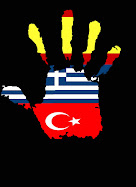
 Ahmet Çallioglu Çok Programli Lisesi (Aydin, Turkey)
 Primary School of Afxentio (Xanthi, Greece)
 I.E.S. Monastil


