BIENVENIDA / WELCOME

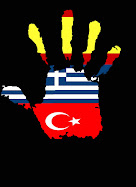
Este blog es el instrumento de comunicación para todos los participantes en el Programa de Aprendizaje Permanente (P.A.P.) Comenius. Se trata de una asociación multilateral entre tres países: Turquía, Grecia y España. Nuestros centros educativos van a trabajar temas relacionados con la historia, las tradiciones, la religión, el ciclo festivo, etc. Y nuestro principal objetivo es estrechar los lazos que unen a estas tres culturas mediterráneas.

This blog is a communication tool for every participant in the Comenius Lifelong Learning Programme (L.L.P.). It is a multilateral association of schools in these three countries: Turkey, Greece and Spain. We are going to deal with subjects such as History, Traditions, Religion, The Festive Cycle, etc. And our main objective is to approach the similarities which these three Mediterranean cultures have.

domingo, 30 de noviembre de 2008

El Greco, un film hispano-griego / El Greco, a Spanish-Greek film coproduction

(basada en la novela del escritor griego Dimitris Siatíopulos El pintor de Dios)

Acabamos de llegar de nuestro viaje a Estambul y Atenas y, como si los hados se hubieran puesto de acuerdo para que no nos olvidemos de nuestra reciente experiencia en Grecia, nos encontramos con los carteles publicitarios de una película épica sobre El Greco, atormentado pintor nacido en la isla de Creta, de formación en la escuela veneciana, y asentado en su madurez en España, donde hizo grande el arte de la pintura de tema religioso. Sus creaciones, como las de los grandes artistas, hacen que los extremos se toquen: materialismo y espiritualidad. Sus personajes reflejan virtudes y defectos humanos y, sin embargo, destilan ascetismo y nos acercan a lo divino. Pintor incomprendido en su época, como todos los genios, con el tiempo se convirtió en referente no sólo para otros pintores, sino también para los escritores de la generación del 98.

En nuestra opinión, a la película le falta acción, debido a su narración en forma de diario en primera persona. Pero posee otros logros como el espectacular trabajo de los dos antagonistas, El Greco y el cardenal Niño de Guevara (Nick Ashdon y Juan Diego Botto), en el eterno enfrentamiento entre la gracia divina y la vulgaridad.

Recomendable documento didáctico para estudiar la época del Barroco con sus claroscuros: esplendor artístico frente a la repudiable actuación de la Inquisición. Aunque nosotros nos quedamos con las imágenes costumbristas de la isla de Creta, la música de Vangelis, las danzas populares y el rakí…¡Qué gratos recuerdos!


(based on the novel God`s Painter by the Greek writer Dimitris Siatíopulos)

Just after returning from our trip to Istambul and Athens as if Fate had agreed not to allow us forget our recent experience in Greece, we came across the posters showing the epic film “El Greco” at our local cinemas. He was a tormented painter born in the island of Crete, from the Venecian school, who spent his adult life in Spain where he mastered the religious genre. His creations, as the greatest artists’ ones, entangled extreme considerations such as: materialism and spirituality. His characters reflect human virtues as well as vices. They both show asceticism and appproach us to the divine. He was misunderstood in his lifetime, as geniuses always are but, as time passed, he became an idol for other painters and for the writers of the 98 generation.

In our opinion, the film lacks action since it is presented in the form of a diary written in the 1st person; but the two main characters , The Greco (Nick Ashdon), and Cardinal Niño de Guevara (Juan Diego Botto) make an spectacular work, enhancing the eternal clash between divine grace and vulgarity.

It is undoubtedly a recommendable didactic document to study the Barroque period and its chiaroscuro: artistic splendour versus the revolting methods of the Inquisition.
To end up, we would want to suggest a less dramatic insight, to enjoy the strong regional flavour of Crete’s customs and manners, the music by Vangelis, the popular dances, the raki... What nice remembrances!

English...

sábado, 29 de noviembre de 2008

Nuevo hallazgo sobre el Mediterráneo / A new finding about the Mediterranean


Leyendo El País de hoy hemos encontrado un interesante artículo de Carlos García Gual en el que reseña un libro que habla sobre uno de los temas de nuestro blog: el Mediterráneo, su cultura y su historia. Se trata de una obra reciente de John Julius Norwich que se titula El Mediterráneo. Un mar de encuentros y conflictos entre civilizaciones. Para Carlos García Gual es el libro de la semana y, por lo que parece, promete hacer honor a la buena crítica. Recomendamos su lectura como ya lo hicimos con el Breviario Mediterráneo de Predrag Matvejevic que, por cierto, también aparece mencionado en este artículo cuyo título es "Polifonía mediterránea".

(Podéis enlazar con el artículo desde la lista de libros).


Reading today`s edition of the Spanish newspaper El País, we have found an interesting article by Carlos García Gual who writes an outline of a book which deals with one of the subjects we are involved in: The Mediterranean, its culture and its history. It is about a recently issued book by John Julius Norwich named The Mediterranean. A sea of encounters and struggles among civilizations. For Carlos García Gual it is the book of the week and it seems to be as good as it has been talked about. We recommend its reading as we already did with Mediterranean Breviary by Predrag Matvejevic, who, by the way, is also mentioned in this article whose title is “Mediterranean polyphony”.

(You can reach the article from the book list)

English...

Interpretando el Guernica de Picasso


Para la celebración del DÍA de la TOLERANCIA, los alumnos y alumnas de 3º B de ESO del IES MONASTIL, han elaborado una obra plástica de gran formato (213X113 cm).

El trabajo, dirigido por la profesora María Gosalbes, se ha llevado a cabo entre el 16 de octubre y el 13 de noviembre en el aula-taller de EPV; Se trata de una actividad que se enmarca en el tratamiento transversal de la Educación para la Paz, planteada desde del ámbito de la Educación Plástica y visual.
En primer lugar se ha analizado esta obra de Picasso, de la que existe una muy buena reproducción en el centro. Teniendo en cuenta que es el retrato de los horrores de la Guerra Civil bajo el prisma de Picasso, se plantea a los alumnos y alumnas la realización de una interpretación, dando una vuelta de tuerca que transforme el desastre, el caos, el drama, el miedo, etc. en lo contrario, defendiendo el poder de cambiar el mundo desde la cultura, la paz, la democracia…
Por equipos han abordado cada elemento - personaje – de la obra, realizando los bocetos con las ideas de cambios oportunas.
Se han trabajado los rostros y parte de los personajes con collage, componiendo caras picasianas, pero a color, y buscando las expresiones contrarias al original.
Hemos montado la composición basándonos en el referente, y sobre ella hemos dado los acabados pictóricos adecuados para aglutinar dibujo, collage y color.

¿Qué ha supuesto esta interpretación para los alumnos y alumnas?

Es destacable el logro del joven que está sentado leyendo un libro, porque es el personaje paralelo al combatiente herido: Cambiando armas por libros, hacemos revivir a un soldado muerto en el bombardeo. Además le hemos vestido de rayas, en claro homenaje a Picasso.

También se puede hacer una referencia similar al personaje de la madre con su hijo en brazos, o a la mujer que corre. La madre es ahora símbolo de vida y continuidad. La mujer que corre lleva los pinceles que dan color al caballo, o sea que protagoniza y abandera el cambio a un mundo mejor.

Con esta actividad se ha conseguido conocer un poco más la obra original, Guernica, de Picasso, y lograr una interpretación plástica antagónica; fomentando el trabajo en equipo, y valorando la necesidad de una convivencia en paz, para la que es fundamental la TOLERANCIA.


Our Version of Picasso`s Guernica


To celebrate the International Day of Tolerance, the students in the 3rd year group B at the I. E. S. Monastil, made a 213x113 cm big plastic display.

The work was directed by the arts teacher María Gosalbes and was done from October the 16th to November the 13th at our high school arts workshop. It is an activity within the new teaching legal frame in which values such as Education for Peace are included in the programming of every academic subject, in this case Plastic and Visual Education.

Firstly, they analysed the Guernica, of which there is a very good reproduction at our school. Then, considering it represents the Civil War horrors seen by Picasso, the students were told to make a new version which transforms disaster, chaos, drama, fear etc. into the contrary, supporting the power of change through culture, peace and democracy.

They have made each element in work teams making previous sketches with their ideas and later changing what was agreed to.

Faces and part of the bodies have been composed using the technique of collage, colourful Picassian faces showing happiness, contrasting the referent Guernika.

The whole composition has been based on the original, including pictorial touches to bind together drawing, collage and colour.

What has this interpretation meant to our students?

“It is remarkable to observe a sitting youngster reading a book, because he is a parallel character to the wounded combatant: using books instead of weapons we return to life the soldier shot in the battle. Furthermore, he is wearing striped clothes, a clear homage to Picasso.“

We can also make the same comment about the mother holding her child and the other woman running. “The mother is now a symbol of life and continuation. The running woman is holding the brushes which colour the horse, leading the change towards a better world.”

With this activity we have come to know Picasso`s work closer and have been able to do an opposed plastic version. We have also promoted team`s work and valued the necessity of a peaceful atmosphere, for which TOLERANCE is essential.

English...

martes, 25 de noviembre de 2008

Feria Solidaria / Solidarity Fair


En las fotos podéis ver imágenes de la Feria Solidaria que se celebró el pasado 20 de noviembre en nuestro instituto para conmemorar el Día Internacional de la Tolerancia. Como se puede observar consistió en montar una serie de puestecillos en los que se exhibían productos típicos de diferentes países. Los alumnos extranjeros del instituto colaboraron trayendo de sus casas vestidos, cerámica, productos gastronómicos, platos cocinados, banderas, vídeos, fotos, murales, mapas y otras curiosidades que, colocadas a modo de escaparate, daban la sensación de estar en un lugar sin fronteras, cosmopolita y multicultural, donde la autenticidad, lo propio, lo diferente tenía cabida en un gran puzzle multicolor.

La Feria tuvo muchísimo éxito entre nuestros alumnos que se lo pasaron en grande y hasta recibimos la visita de un grupo de alumnos de La Melva. No faltaron tampoco los medios de comunicación que se hicieron eco del evento en diferentes programas. Y, ¡cómo no!, hasta contamos con la presencia del Concejal de Educación y la Concejala de Solidaridad que amablemente acudieron a las inauguración.

Entre las colaboraciones externas, contamos con la participación de los representantes del Comercio Justo en Elda, que nos mostraron sus productos y nos explicaron cómo se puede ser solidario a través de la compra de estos productos.

Destacar también la colaboración de los alumnos del Ciclo de Turismo que, ataviados de trajes típicos, desempeñaron de maravilla su trabajo de asesores turísticos en los stands dedicados a México, Grecia y Turquía. También demostraron una gran implicación los alumnos de 1º de Bachiller que se encargaron de representar a España, Reino Unido e Italia.

Como fin de fiesta, después de los talleres, entre los cuales había uno de henna que tuvo mucha afluencia, pudimos asistir a un concierto muy especial en el que el artista invitado, Habib, el gitano de Argel, supo crear con su talento musical un ambiente mágico que contagiaba alegría y “buen rollito”.

Tan satisfechos hemos quedado que pensamos repetir la experiencia el próximo curso.


We have included some images of the Solidarity Fair we celebrated at our school last Thursday, november 20th to commemorate the International Day of Tolerance. We set a number of market stalls in which we showed typical products from different countries. The foreign students in our school brought either garments, pottery, typical food, ready-made recipes, flags, videos, photos, wall displays, maps and other curiosities which were exhibited in such a way that we were transported to a borderless place, authentic, global and multicultural where the nearby products, as well as the far away ones, were reunited in a colourful puzzle.

The Fair was a complete success. Our students enjoyed a lot and we were even visited by the close IES La Melva. The Education and Solidarity Town Councillors kindly presided its opening and the local radio stations, newspapers and TV channels also came to broadcast the event.

Among the external collaborations, one of the stalls was set by representatives of the Fair Trade Local Charity which displayed their products and explained us how to help needed people by getting some of their items.

We were helped by the students in our Touristic Marketing Professional Course, who dressed typical costumes and did an splendid work as touristic agents in the stands dedicated to Mexico, Greece and Turkey. The students in the 1st year of Bac also helped in the stands representing Spain, the United Kingdom and Italy.

Among the different workshops, there was a very crowded one in which you could be drawn a surface tattoo.Once they finished their activity, as a closing, there was a very special concert by Habib, an Arab gypsy musician. He had a great musical talent and we were all wrapped up in a magic atmosphere transmitting us sudden merriment.

So delighted we were that we will probably have a second edition next year.

English...

¿Sabías que... / Did you know that...


...las típicas “tapas” españolas tienen una versión similar en la tradición culinaria de Turquía y Grecia?

En Turquía se llaman meze y son entrantes ligeros fríos o calientes que se toman como comida ligera o se sirven antes del plato principal. Algunos ejemplos son: sigara boregi (queso frito con rollitos de hojaldre), barbunya (alubias en aceite de oliva) y pimientos verdes rellenos. Tuvimos la oportunidad de probarlas en el encuentro Comenius que celebramos hace unos días en Estambul y nos parecieron exquisitas.
En nuestra visita a Atenas también pudimos probar las mezzedes en varias tabernas que ofrecían gran variedad de platitos a elegir, tanto de pescado, de carne o de verduras, y que por supuesto también nos resultaron de lo más suculento.
Tanto las tapas como las meze y las mezzedes son muestras de la costumbre mediterránea de compartir aperitivos y platos variados mientras se conversa y se disfruta de nuestro cálido clima y nuestro talante abierto y desenfadado. Otro punto en común entre los tres países que hemos descubierto.


Did you know that the typical Spanish “tapas” - cold or hot appetizers to be shared among the people at the same table – have a similar version in Turkish and Greek cuisines ?

In Turkey they are called meze and are very popular as a light snack or starter before a meal. Some well-known examples are: sigara boregi (fried cheese and pastry rolls) barbunya (beans in olive oil) and stuffed green peppers. We had the opportunity to taste them in our recent meeting in Istambul and they were delicious, indeed.
In our visit to Athens we could also enjoy the Greek mezzedes in some popular taverns, where we were offered a great variety of different dishes including fish, meat and vegetable specialities that of course were all very tasty.
Tapas, meze and mezzedes all follow the Mediterranean tendency of sharing snacks or light meals while getting into conversation, especially in terraces or open air spaces, enjoying the mild climate and our natural friendly disposition. One more thing which is exaclty the same in the three countries.

English...

jueves, 13 de noviembre de 2008

Manifesto about Tolerance


The UN proclaimed November the 16th the annual International Day for Tolerance to generate public awareness about the dangers of all kinds of Intolerance: social, political, economical, ethnical, religious, etc. and commit everybody to act in support of actions that promote and favour the coexistence of the different peoples in the world. It means an encouragement to benefit from diversity to improve and enrich ourselves, and this is precisely what we have attempted in our Comenius association.
Tolerance is the subject which names our project and which links all the activities we have done so far. Our purpose is to get advantage of both, differences and similarities, and improve personally and professionally so that our students can benefit as much as possible from this enrichment.
Today, November the 16th 2008, Greeks, Turkish and Spaniards are celebrating the International Day of Tolerance in our 4th meeting, and here, as representatives of our three educative communities, we commit ourselves to work and behave favouring tolerant attitudes and actions.

Istambul, November the 16th 2008.-

English...

viernes, 31 de octubre de 2008

¿Sabías que... / Did you know that...


Jean Michel Jarre fue nombrado en 1993 Embajador de Buena Voluntad para la Tolerancia y la Juventud de la UNESCO?

Comienza así la actividad política de Jarre, en defensa de los derechos universales del hombre, participando en foros y continuando con la realización de megaconciertos en sitios considerados por UNESCO como patrimonio de la humanidad.
Entre los momentos más memorables de su labor como Embajador de Buena Voluntad figuran el Concierto para la Tolerancia que ofreció al pie de la Torre Eiffel, en París, coincidiendo con el cincuentenario de la UNESCO. Para esa ocasión compuso además un tema sobre la tolerancia. Más recientemente, dio también un recital, el Concierto del Milenio, ante las pirámides de Egipto. Infatigable promotor de los derechos y de la educación de la juventud, es un auténtico mensajero de la tolerancia, del pluralismo cultural y del respeto para todos los jóvenes del mundo.

Pionero y estrella reconocida de la música electro-acústica, sus macroconciertos, que combinan alta tecnología sonora, láser y espectáculos pirotécnicos, congregan a decenas de miles de espectadores.


Jean Mitchel Jarre was made Goodwill Embassador in 1993 on behalf of Tolerance and Youth for the UNESCO?

That is the way in which Jarre`s political activity starts for the benefit of the universal rights of people, taking part in meetings and performing mass concerts in places considered by the UNESCO as part of humankind`s heritage.

The concert he offered for tolerance in Paris, at the very foot of the Eiffel Tower, in the 50th anniversary of the UNESCO is among the best remembered moments of his work as Goodwill Ambassador. He composed a piece about tolerance especially for the occasion. More recently, he did another performance, the Millenium Concert, in front of the Egyptian Pyramids. Tireless supporter of the rights and education of Youth, he is a real messenger of tolerance, plural culture and respect for every youngster in the world.

As a pioneer and well-known star of electro-acoustic music, his mass concerts, which combine high sound and laser technology as well as other effects as fireworks, always gather thousands and thousands of followers.

English...

martes, 28 de octubre de 2008

Himnos por la paz / Hymns for peace

La música ha sido siempre una potente herramienta para transmitir sentimientos y su lenguaje universal al servicio de los ideales de algunos artistas comprometidos con los problemas sociales de su tiempo ha llegado a millones de personas de todo el mundo sin distinción de idiomas, religiones o razas.
Todos podemos recordar bellísimas canciones que consiguen emocionarnos cada vez que las escuchamos. Algunas alcanzan la categoría de "Himnos por la paz", como Imagine de John Lennon, o Blowin in the wind de Bob Dylan.
Los autores de este blog solicitamos vuestra colaboración para encontrar la canción que mejor sirva para transmitir el ideal de tolerancia por el que luchamos en nuestra Asociación Comenius. Nosotros proponemos una de Rosario Flores, mejor dicho el autor es Antonio, su hermano, pero recientemente es Rosario la que la ha reeditado en su último álbum, con bastante éxito, por cierto. Nos referimos a No dudaría.
Si os apetece escuchar la canción a la vez que oís la letra y véis un videoclip con imágenes sobre la pobreza y la guerra pinchad aquí. Y si queréis leer la letra en inglés hacedlo donde pone English.

Y para que no nos tilden de partidistas por promocionar lo nuestro, ahí va otro vídeo de una canción de moda que habla también sobre el deseo de poder y sobre la guerra. La mítica banda Coldplay nos ha dado toda una lección de solvencia tanto en la música como en la letra de la canción Viva la vida. Pero lo que más nos gusta es el videoclip. A ver si adivináis el famoso cuadro sobre el que está inspirado.


Music has always been a powerful tool to transmit feelings and its worldwide language has always meant a way of expression for the ideals of artists compromised with the social problems of their time which has reached millions of people regardless of their language, belief or race.
We all remember beautiful songs which move us whenever we listen to them. Some of them become real “Hymns for peace”, as Imagine by John Lennon, and Blowing in the wind by Bob Dylan.
From this blog we encourage you to help us find the best song to transmit the ideal of tolerance we are concerned with in our Comenius Association. We propose one by Rosario Flores. Its author was her brother Antonio, but Rosario has recently reissued his last album quite successfully. Its title is No dudaría, (I wouldn`t doubt it).
If you feel like listening to the song while watching images about war and poverty, click here.
And for the ones thinking of us as “interested” people for promoting our sake, we have got another video clip of one of the latest songs which also talks about war and power. The mythical band Coldplay has taught us a lesson on citizenship both in the music and in the lyrics of the song Viva la Vida (Cheers for life). But what we like most is the videoclip. Can you guess what painting was taken the idea from?


If I could forget
Everything I was
If I could wipe out
Everything I saw
I wouldn`t doubt
I wouldn`t doubt to laugh again


If I could explain
The people I murdered
If I could burn
The weapons I used
I wouldn`t doubt
I wouldn`t doubt to laugh again


I promise to consider merriment
To learn from my experience
But never, never again
Use violence


If I could sow
The fields I devastated
If I could give back
The peace I snatched
I wouldn`t doubt
I wouldn`t doubt to laugh again


If I could forget
That crying I heard
If I could manage
To get it away from me
I wouldn`t doubt
I wouldn`t doubt to laugh again


I promise to consider merriment
To learn from my experience
But never, never again
Use violence

English...

domingo, 26 de octubre de 2008

Carteles antibelicistas / Anti-war posters

diseño NOlo
En el mes de la Tolerancia, queremos contribuir a difundir todo aquello que tenga que ver con el respeto a la diferencia, la defensa de la paz, la lucha contra la xenofobia y cualquier forma de discriminación, la tolerancia cero contra la violencia de género, el entender la multiculturalidad como una riqueza, la integración de los inmigrantes como miembros iguales de la colectividad... y tantos otros ideales por los que luchar. Cualquier pequeño detalle nos anima a creer que los buenos sentimientos no son tan raros como parece.
La motivación de hoy para hacer este post la hemos encontrado en una fantástica web en la que se pueden encontrar una gran variedad de carteles antibelicistas realizados por diseñadores gráficos conocidos. Valga una muestra: another poster for peace


In the month we commemorate Tolerance, it is our aim to spread everything connected with the respect towards differences, the defence of peace, the fight against xenophobia, marital abuse and any other kind of discrimination. We consider a multicultural society an extremely wealthy one, which integrates immigrants as equal members of a community... There are so many ideals to fight for.

We have got today`s motivation for this post in a fantastic web in which you can find a great variety of anti-war displays made by well-known graphic artists. There a sample here: another poster for peace.

English...

miércoles, 22 de octubre de 2008

Trabajando por la tolerancia / Working for the sake of Tolerance


Con motivo de la celebración del Día Mundial de la Tolerancia el próximo 16 de noviembre, el IES Monastil ha programado un conjunto de actividades que ya se están trabajando en el centro. Son las siguientes:

Ciclo de música: durante los cambios de clase se puede escuchar música de diferentes países y culturas: sonidos étnicos de Marruecos, Argelia, Sahara … ambientan nuestros pasillos y ratos de ocio.

El mundo en el Monastil: paneles y murales con mapas del mundo en los que se indican los países de procedencia de los alumnos inmigrantes que conviven con nosotros. Más de 15 países, alrededor de 50 alumnos extranjeros, tendrán su representación en estos murales que abarcan no sólo la geografía sino también otros aspectos como la demografía, las banderas, la lengua, la gastronomía, etc.

El Guernica en positivo: interpretación del famoso cuadro de Picasso cuya reproducción preside el vestíbulo que da acceso al edificio del instituto y que es todo un símbolo tan antiguo como el propio centro. Los alumnos de 3º ESO están recreando el cuadro a partir de la consigna que les ha dado su profesora de Plástica, ofrecer la visión opuesta al sentimiento de horror y caos que transmite la escena del histórico bombardeo de la ciudad de Guernica.

Elaboración de videos para promocionar la tolerancia por parte de los alumnos de teatro.

Libro ilustrado “Contra la intolerancia”: textos y dibujos aportados por alumnos, profesores, personal no docente y demás miembros de la comunidad educativa.

Si con todo ello podemos conseguir mejorar la integración de las diferentes etnias y culturas y aminorar los prejuicios en torno a la diferencia, que es una riqueza y no un obstáculo, nos daremos por satisfechos. Aunque reconocemos que los hechos que acaecen diariamente y que podemos ver y escuchar en las noticias, nos demuestran que queda mucho por hacer, y que el racismo y la xenofobia siguen siendo grandes lastres que arrastra nuestra moderna sociedad, no tan civilizada como creemos.

Como acto simbólico que sirva a modo de punta del iceberg de esta ola de tolerancia, justo en esta conmemorativa fecha, realizaremos un encuentro multicultural de nuestro programa Comenius en Estambul. Allí, en el estrecho del Bósforo, geográfico enclave que une Oriente y Occidente, firmaremos un manifiesto en pro de la tolerancia, en el que nuestros respectivos colegios, en representación de Grecia, España y Turquía, se darán la mano una vez más para estrechar todavía más los lazos que nos unen.


In order to celebrate the International Day of Tolerance the next 16th of November, the IES Monastil has planned several activities which are already being prepared. They are:

☻A Music cycle: in the periods between classes we play music belonging to different countries and cultures: ethnical sounds from Morocco, Algeria, The Sahara... in this way we create a cosy atmosphere in our corridors and leisure breaks.

☻The world in the IES Monastil: posters, displays and wall maps in which the countries where our foreign students come from are marked. More than 15 countries and about 50 students will be included in them. Apart from pure Geography, other aspects such as demography, flags, languages, cuisine, etc. will be shown.

☻The “happy” Guernica: There is a reproduction of the world-wide known Picasso which presides over the hall of our main building and has always been a symbol for the school. The third year students are remaking the picture, following their drawing teacher instructions, in order to show the opposite view to the horror feelings and chaos transmitted by the original scene representing the historic bombing in the town of Guernica.

☻Video making: sketches to promote tolerance by the theatre students.

☻Illustrated book “against intolerance”: texts and drawings done by pupils, teachers, caretakers and other workers of our educative community.

If all these tasks allow us to improve the integration of different races and cultures and reduce prejudices against differences – as an enriching factor rather than an obstructing one – we will be satisfied; although we are unfortunately used to watch and listen to frequent news which show there is still a lot to be done, and that racism and xenophobia continue to be a serious burden for our “not so modern as we think” civilization.

As a symbolic action which represents as the peak of an iceberg this fresh wave of Tolerance, exactly in the stated date, we will have a multicultural meeting of our Comenius programme in Istambul. There, in the Straits of Bosphorus, geographical division between East and West, we will sign a manifesto for the sake of tolerance, in which our three schools, representing the countries of Greece, Spain and Turkey, will shake hands once again to strengthen our already close linking bonds.

English...

jueves, 16 de octubre de 2008

Dear Güllü


This is just to let you know that the news about you moving to another school and for that reason leaving the association came as a sudden shock which rubbed from our minds like a terrible thunderstorm the happy expectations of a second year of such an enriching experience.

How much have we learnt from you! Turkish culture and religion, art, history but above all, so much kindness, hard work, honesty, good feelings, manners and lots of affection that you shared with those around you. We will miss your great contribution to the project the rest of the time, and of course we will never forget both your professional and personal value. All in all, it will not be the same without you.

How ignorant of other ways of living, feeling and believing had we been! This project has let us know different people, places and ways in a very close, friendly and caring approach and has given the three schools the opportunity of realising how different we are in the surface and how similar we are in a deeper sense.

We cannot avoid thinking of you now that we are so much involved arranging our next November meeting in Istambul. You are on our minds when referring to the trip, the visits, the work done and to be done... you are all around us. It had not so far crossed our imagination that we could finish the project without you. We know how much you had wished to visit Spain next Spring. We can imagine you in the Alhambra courtyards and having a walk in the magnificent Generalife Gardens together with us, having such interesting talks as we used to in our previous meetings,there, in the very heart of the Muslim world, getting to know all that about eternal life, strong beliefs and faith that we used to talk about, a soft balm soothing the sour hurtful pain of our surely ignorant earthly short and meaningless life.

Dear Güllü, how ennobling has it been to discover a neverending world full of happiness and wellbeing that will be gladly enjoyed by those who have become our beloved friends! One feels relieving comfort and imagines just to be able to grasp a minute scrap of eternity, as if by any means there was a possibility of staying in a tiny corner of these great friends`souls forever.
Thanks for everything. We wish you the best forever.

English...

domingo, 12 de octubre de 2008

Día de la Hispanidad / Day of Hispanity


Hoy 12 de octubre se celebra el Día de la Hispanidad. En nuestro de deseo de solidaridad y de unión con gentes de diferentes razas, culturas y religiones, no podíamos dejar de mencionar a nuestros parientes más cercanos, los ciudadanos de Hispanoamérica, con quienes tantos lazos nos unen. Es una fecha polémica, porque nos recuerda tantas cosas que se hicieron mal. Pero no debemos olvidar lo fundamental, el 12 de octubre de 1492 Cristóbal Colón descubrió América, fue un gran día para la Humanidad. Y por eso, muy acertadamente, las instituciones están promocionando un gran festival para celebrar este evento. El festival Vivamérica, con sede este año en Madrid, Tenerife y Bogotá, quiere ser un marco de celebración para la alegría y los buenos sentimientos. La música, el más universal de los lenguajes, es una buena manera de comunicar estos lazos afectivos. Este año la banda sonora es la canción "El presente" de Julieta Venegas. (Escuchar la canción)


Today, October 12th, is the Day of Hispanity. We wish to express our solidarity and union with the people belonging to other cultures,ethnical groups and beliefs. However, we could not forget our closest connections: the citizens from Hispanic America, with whom we are so tightly linked. It is a controversial date because it reminds us of a lot of things which were wrongly done, but we ought not to forget the essential point: on October 12th, 1492 Christopher Columbus discovered America and it was a great day for Humankind. That is why, very fairly, institutions are promoting a great festivity to commemorate such event. The Vivamerica Festival, this year taking place in Madrid, Tenerife and Bogota, is a reference for happiness and good feelings. Music, the most universal of languages, is a good way of communicating this affective ties. This year the official song is the one titled “The present” by Julieta Venegas. (listen to the song)

English...

sábado, 11 de octubre de 2008

In tolerance be like a sea (Mevlana)


In generosity and helping others be like a river
In compassion and grace be like a sun
In concealing other's faults be like night
In anger and fury be like death
In modesty and humility be like Earth
In tolerance be like a sea
Either exist as you are or be as you look...


(Music by Ercan Saatçi)

English...

Mañana puedes ser tú / Tomorrow it could be you


Primero se llevaron a los comunistas
pero a mí no me importó porque yo no lo era.
Enseguida se llevaron a unos obreros
pero a mí no me importó porque yo tampoco lo era.
Después detuvieron a los sindicalistas
pero a mí no me importó porque yo no soy sindicalista.
Luego apresaron a unos curas
pero como yo no soy religioso
tampoco me importó.
Ahora me llevan a mí pero ya es tarde.


First Comunists were taken
But I did not mind since I was not one of them.
Just after they took some workers
But I did not mind since I was not one of them either.
Then they caught unionists
But I did not mind as I am not a unionist.
Later they arrested priests
But since I am not a religious person
I did not mind either.
Now they are taking me but it is too late.


Bertold Bretch

English...

jueves, 9 de octubre de 2008

Un ejemplo de tolerancia / An example of Tolerance


El día 16 de noviembre se celebra el Día Mundial de la Tolerancia y con este motivo queremos hacer algo muy especial que sirva para rendir tributo a este noble valor que nos une y que da nombre a nuestra Asociación Comenius.

Os invitamos a mandarnos todo tipo de colaboraciones relacionadas con la TOLERANCIA: imágenes, carteles, frases, dibujos, textos, poemas… Pero también sería interesante hacer alguna actividad concreta que refleje de manera directa nuestra contribución a la mejora de la tolerancia en nuestro entorno.

¡Esperamos vuestras ideas! Todas las aportaciones serán bienvenidas y recogidas para ponerlas en común en el meeting que celebraremos en Estambul a partir del 17 de noviembre.

Por ahora nuestra pequeña contribución a la difusión de la tolerancia en el mundo es la buena convivencia que reina entre los miembros de nuestra asociación. Prueba de ello son las fotos que pertenecen a nuestro último encuentro en Izmir en junio de 2008. Las sesiones de trabajo y las visitas institucionales se complementan, como podéis ver, con una estrecha relación de amistad que se va afianzando cada vez más, gracias a las agradables veladas de charla y al intercambio de vivencias llenas de emociones y afecto. Sin duda, esta es la mejor medicina contra la intolerancia.


On November 16th, we celebrate the International Day for Tolerance and, for this reason, we want to do something very special to honour this great virtue which links us together and names our Comenius Association.

We invite you to send any kind of work in connection to TOLERANCE: images, posters, sentences, drawings, texts, poems ... but it would also be very interesting to do one single common activity as a direct reflection of our contribution to the improvement of tolerance in our surroundings.

We expect your contributions! All of them will be welcomed and dealt with in common in the meeting we will have in Istambul next November.

So far, our small contribution to the spread of tolerance in the world is the good coexistence among the members of our association. To prove it we have the photos taken in our latest meeting in Izmir last June. The working sessions and the institutional visits alternated, as can be seen, in an atmosphere of kind friendship which is constantly becoming deeper, thanks to the charming long talks and the interchange of experiences full of affection. No doubt, it is the best medicine for the treatment of intolerance.

English...