BIENVENIDA / WELCOME

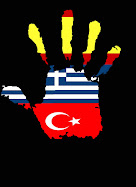
Este blog es el instrumento de comunicación para todos los participantes en el Programa de Aprendizaje Permanente (P.A.P.) Comenius. Se trata de una asociación multilateral entre tres países: Turquía, Grecia y España. Nuestros centros educativos van a trabajar temas relacionados con la historia, las tradiciones, la religión, el ciclo festivo, etc. Y nuestro principal objetivo es estrechar los lazos que unen a estas tres culturas mediterráneas.

This blog is a communication tool for every participant in the Comenius Lifelong Learning Programme (L.L.P.). It is a multilateral association of schools in these three countries: Turkey, Greece and Spain. We are going to deal with subjects such as History, Traditions, Religion, The Festive Cycle, etc. And our main objective is to approach the similarities which these three Mediterranean cultures have.

domingo, 31 de agosto de 2008

Logos de alumnos turcos / Logos from Turkish students

Autor: Çagil Sönmez


Nuestro concurso de logotipos para nuestro blog COMENIUS NET OF TOLERANCE está dando sus frutos. Además del elegido entre los propuestos en el IES Monastil, disponemos de tres logos que nos han enviado nuestros compañeros turcos. El que ha sido elegido como ganador en el instituto Ahmet Çallioglu Çok es el primero de ellos y pertenece al alumno Çagil Sönmez.


¿Verdad que son todos ellos preciosos?


Autor: Oguz Isi


Autor: Tugba Simsir


The Logo contest to choose the Comenius Net of Tolerance logo is having more participants. Apart form the chosen one at the IES Monastil, our Turk mates from the Ahmet Çallioglu Çok have sent three more samples. Their chosen one is the first one shown, done by the student named Çagil Sönmez.
Aren’t they really nice?

Author: Oguz Isi
Author: Utgba Simsir

English...

Turkey marks Victory Day /Día de la Victoria en Turquía


Queridos amigos:
Turquía conmemora hoy el 86 aniversario del Día de la Victoria. Los actos comenzarán con una visita oficial a Anytkabir, el mausoleo del fundador de nuestra nación: Mustafa Kemal Atatürk.
El General Ulker Babbuo firmará en el libro de autoridades de Anytkabir por vez primera desde que fue nombrado Capitán General. A continuación el General Babbuo acogerá al Presidente de la República, Abdullah Gül y al Presidente del Gobierno, Tayyip Erdodan, a sus ministros, líderes de partidos políticos, delegados diplomáticos en Ankara y periodistas en una recepción en el Cuartel General de las Fuerzas Terrestres.
Güllü


Turkey will mark the 86th anniversary of Victory Day today (30.08.08). The celebrations will begin with an official visit to Anıtkabir, the mausoleum of the country's founder, Mustafa Kemal Atatürk. Gen. İlker Başbuğ will sign the Anıtkabir guest book for the first time in his newly appointed post as chief of general staff. Later in the day Gen. Başbuğ will host President Abdullah Gül and Prime Minister Recep Tayyip Erdoğan, as well as ministers, political party leaders, members of diplomatic missions in Ankara and journalists at a reception in the Land Forces headquarters.

English...

miércoles, 27 de agosto de 2008

Presentación de las nuevas actividades realizadas / Presentation of activities

Durante el tercer meeting hicimos intercambio de las actividades realizadas en las tres comunidades educativas a lo largo del periodo que va desde Febrero a Junio de 2008. Poco a poco iremos dándolas a conocer en el blog en sucesivas entradas. De momento y para abrir boca os contamos de qué van en líneas generales.

-Los participantes del colegio de primaria de Afxentio en Grecia nos hicieron entrega de un interesante estudio sobre los puentes medievales que hay en los alrededores de su ciudad y sobre las fiestas de Carnaval.

-Los anfitriones, el instituto Ahmet Çallioglu Cok de Aydin en Turquía, aportaron materiales sobre Mevlana, el filósofo, místico y poeta Sufi, cuya doctrina es seguida todavía hoy en día por ser considerado un abanderado del pacifismo. Precisamente en el 2007 se cumplió el 800 aniversario de su nacimiento.

-En cuanto a nosotros, el IES Monastil de Elda, hemos trabajado en profundidad el tema de las fiestas religiosas y profanas, centrándonos especialmente en la advocación que dirige nuestra ciudad a San Antón y en las fiestas de Moros y Cristianos.


Paralelamente a estas tres grandes líneas de trabajo, cuyos resultados se podrán ver próximamente en la caja de descargas del blog, también se han realizado otras actividades con el fin de conocer más a fondo la cultura de los tres países. En este sentido, los alumnos de 3º ESO del IES Monastil estuvieron trabajando con sus profesores de Geografía e Historia elaborando mapas y murales de España, Grecia y Turquía y también han estudiado aspectos de la historia de los tres países. Aquí tenéis una muestra de los resultados.


During the third meeting we interchanged the tasks done in the three educative communities from February till June 2008. Little by little we will show them in the blog. Now we will just tell you what they are about:

-The participants from the Primary School in Afxentio (Greece) shared with us an interesting study about the medieval stone bridges in their town surroundings.

-The host school, Ahmet Çallioglu Cok in Incirliova (Turkey), brought materials about Mevlana, the Sufi philosopher, mystic and poet, whose doctrine is followed even today, being considered a supporter of peace as a value against all kinds of violence. The 800th anniversary of his birth was celebrated in 2007, by the way.

-The IES Monastil thoroughly worked on religious and lay celebrations, focusing our interest in the Moors and Chirstian Festivities and its reference to Saint Antón.

Together with these three working trends whose results will be available in the download box, other activities concerning the culture in the three countries have also been developed. For instance, the pupils in the third year of Secondary Education at the IES Monastil made maps and posters of Spain, Greece and Turkey within the subject of Geography and are studying aspects of the History of the three countries, as well. Here you have a sample of what they did.

English...

lunes, 25 de agosto de 2008

Breviario mediterráneo / Mediterranean breviary


En nuestras indagaciones sobre la cultura mediterránea que une a los tres países que conformamos esta asociación Comenius, hemos dado con un interesante libro: el Breviario Mediterráneo del prestigioso catedrático de eslavística y profesor de literatura comparada de la Sorbona, Predrag Matvejevic. El libro, revisado en 2002, cuenta con un rico material sobre geografía cultural. En él podemos encontrar una recopilación del patrimonio simbólico de nuestra cultura occidental y todo lo que nos une alrededor del mismo mar, el Mediterráneo.

Es un libro difícil de etiquetar, entre el tratado poético-filosófico, la selección de aforismos, el diario de navegación y el libro de plegarias –éste es el significado original de la palabra breviario-. Nosotros lo recomendamos a los lectores de nuestro blog en especial por su amena redacción y, sobre todo, porque es un compedio de los diversos aspectos de nuestro mar Mediterráneo: economía, sociedad, historia, cultura, política, religión, arte, literatura, filosofía, antropología y geografía.

Estas son las partes de las que se compone:
1) Vivencias del autor en diversos lugares del Mediterráneo.
2) Mapas (viaje a través de cartas de navegación)
3) Glosario (viaje a través de libros antiguos y modernos dedicados al Mediterráneo)

Desde los confines de este mar, españoles y turcos, con la compañía de los griegos, cuna de nuestra antigua civilización, estamos intentando reconstruir el mosaico de pequeñas teselas que forma este complicado juego de convergencias y semejanzas, antagonismos y diferencias que es la cultura mediterránea. Esta sensibilidad mediterránea forma parte de la idiosincrasia de nuestros pueblos y es nuestro deber y nuestro derecho apropiarnos de toda esta cultura porque en el conocimiento está el amor por lo nuestro. Entonemos este himno al Mediterráneo de la mano de Matvejevic:

“...a lo largo de sus costas pasaba la ruta de la seda, se cruzaban la ruta de la sal y las especias, de los aceites y esencias, del ámbar y de los ornamentos, de los instrumentos y las armas, de la sabiduría y el conocimiento, del arte y de la ciencia; el imperio griego era a su vez comercio y embajada, a lo largo de las calzadas romanas se difundió el poder y la civilización; de las regiones de Asia venían juntos los profetas y las religiones: sobre el Mediterráneo fue concebida Europa”.


In our research about the Mediterranean culture which links the three countries taking part in this Comenius association, we have come across an interesting book, The Mediterranean Breviary, by the prestigious compared literature professor at Paris Sorbone Predrag Matvejevic. The book, revised in 2002, has very rich material about cultural Geography. In it, we can find a compilation of the symbolic heritage of our western culture and everything which connects us by the same sea: the Mediterranean.

It is difficult to classify this book. We could consider the poetic-philosophical essay, the selection of aphorisms, the navigation diary and the supplication book – this is the original meaning of the word breviary. We recommend it to our readers both for its amusing reading and, above all, for being a sum of different aspects concerning our common Mediterranean sea: Economy, Society, History, Culture, Politics, Religion, Art, Literature, Philosophy, Anthropology and Geography.

These are the parts in which it is divided:
1.- Life experiences of the author in different parts of the Mediterranean.
2.-Maps (a trip following navigation routes)
3.-Glossary (a trip through ancient and modern books dedicated to the Mediterranean)

From the opposite shores of this sea, Spaniards and Turks in the company of Greeks - as source of our ancient civilization - are trying to rebuild the tile puzzle of tiny pieces which makes this complex game of similarities and differences of our Mediterranean culture. This Mediterranean sensibility is part of the identity of our countries, and our right and duty is to absorb it all since the knowledge of things makes the love for them flourish. Guided by Matvejevic, let`s sing together this Mediterranean Hymn:

“…Along its coasts ran the silk route, a crossroad among the routes carrying salt, species, oil, perfume, amber, ornaments, instruments, weapons, knowledge, art and science; the Greek empire was at the same time trade and embassy. Along the Roman roads power and civilization spread; from the Asian regions prophets and religions came together: Europe spread from the Mediterranean.”

English...

domingo, 24 de agosto de 2008

Canción popular griega / A greek folk song

No nos resistimos a poner un video de youtube en el que aparece una preciosa escena de la película "Los cañones de Navarone". Se la dedicamos a nuestros amigos griegos. ¿Realmente la vida en los pueblecitos griegos es así de idílica? Bueno, lo de idílica es un decir, porque luego aparecen los nazis y rompen el encanto.
Si la sacamos del hilo argumental, la canción popular griega es un himno al Mediterráneo, así que ahí va la letra:
Yialo na pas
Yialo n'arthis
Ta loyia mou
Na thimithis


La segunda estrofa no es original y la improvisa por la situación el actor y cantante James Darren.
Traducida sería algo como:

En la espuma de las olas
En la espuma de las olas del Mar
Mi amado
Mi amado está dormido
Les imploro Olas
No despertarlo
Por el mar nos fuimos
Y todo nos habló de ti
Por el mar te irás
Por el mar retornarás
Recordarás mis palabras
Deseo que el mar sea vino
Y las montañas mezedes (entradas de comida, las más típicas son las salchichas de cerdo)
Y los barcos vasos de vino
y así poder beber los ylentzedes (los que disfrutan de la celebración)
Más o menos.

Por cierto, amigos bloggeros, ¿habéis visto la nueva versión de Mamma mía en cine?
Meryl Streep está espléndida en su papel de dueña de un hotelito en una idílica isla griega tan bonita como el pueblecito de Navarone. ¿Tópico o realidad?


We show a video from youtube in which there is a scene from the film “The guns of Navarone”. We dedicate it to our Greek friends. Is life in Greek villages so idyllic? Well, idyllic is just a way to express it, since the Nazis destroyed its charm at their arrival.
Taken from the original plot, the Greek folk song is a hymn dedicated to the Mediterranean. Its lyrics are:
Yialo na pas
Yialo n'arthis
Ta loyia mou
Na thimithis
The second verse is not original but directly produced for the scene by the actor and singer James Darren. Its translation would be something like:
On the waves foam
On the sea waves foam
My beloved man rests asleep
I beg you waves
Not to wake him up.
Into the sea we left
And everything told us about you.
By the sea you will depart
By the sea you will return
You will recall my words.
If only the sea were wine
And the mountains appetizers
And the boats the glasses
And in that way our guests could taste them
More or less.

By the way, you bloggers, Have you seen the new film Mamma Mia? Meryl Streep is splendid playing the role of a small hotel owner in an idYllic Greek island as beautiful as Navarone. Topic or reality?


English...

Los cañones de Navarone / The guns of Navarone


Retomamos la sección de cine bélico con esta magnífica película basada en la novela de Alistair MacLean: La isla de Navarone, donde se desarrolla el enfrentamiento entre los aliados y los alemanes que habían montado allí una construcción inexpugnable dotada de poderosos cañones.
A destacar de esta película la magnífica interpretación realizada por artistas de la talla de Gregory Peck, David Niven y Anthony Quinn. La arriesgada misión encargada al comando dirigido por el capitán Mallory (Gregory Peck): infiltrarse en una fortaleza ocupada por los nazis y deshabilitar dos cañones de campaña de larga distancia de modo que puedan rescatar a los 2.000 británicos prisioneros, crea una especial relación entre esos hombres audaces y valientes que asumen la responsabilidad y el riesgo de no retorno.
Lo más destacable de esta película de J. Lee Thompson son los efectos especiales. Las explosiones están tan bien hechas que parecen realizadas con los adelantos actuales y no de los primeros años 60. Os recomendamos a todos este clásico del cine tanto por su trama argumental como por su ritmo trepidante.
Nosotros nos quedamos con la frase que le dice el coronel Stavros (Anthonny Quinn) a Maria Pappadinos (Irene Papas) que les ayuda desde la Resistencia, refiriéndose a la muerte de su hermano: "Olvidó para qué vinimos". Un error que nosotros no queremos cometer.


We retake the war section with this splendid film based on the novel by Alistair MacLean. The island of Navarone is the place where the allies fight against the German who had built an impregnable site surrounded by powerful guns.
Gregory Peck, David Niven and Anthony Quinn all do an excellent work. The risky mission ordered to the unit commanded by Captain Mallory (Gregory Peck), the infiltration in a fortress occupied by the Nazis and blocking the two long-range guns to rescue the 2000 British prisoners, creates in all a special relationship among these brave men who cope with the responsibility of lacking a way-back.
The highlights of the film by J. Lee Thompson are its special effects. Explosions are as good as the ones done nowadays, nothing to do with what was usual in the early 60s. We recommend watching this film both because it is packed with action and it also has a very interesting plot as well.

English...

viernes, 22 de agosto de 2008

Un paseo por la historia / A walk along History


Si una imagen ha quedado grabada en nuestra retina al finalizar nuestro viaje a Turquía el pasado mes de Junio, es la de la enorme riqueza arqueológica de este país. Ya nos lo habían avisado: Éfeso es la Grecia turca, y no es para menos. Los vestigios de un pasado de gran esplendor están a la vista en toda la zona: Mileto, Priene, Afrodisias…
La visita a estas ciudades antiguas nos hace sentirnos miembros de una misma civilización: la cultura mediterránea, a la que pertenecemos por derecho: somos descendientes de una saga de hombres y mujeres dignos de nuestro respeto y admiración.

Al lado de estas nobles piedras del pasado, uno se siente pequeño y limitado. Y percibimos que todo lo que nos rodea en el mundo actual es vano y superfluo. Llamamos progreso a la vida cómoda y confortable, a los avances tecnológicos, a las prisas por vivir más y más rápido, a acumular cosas y objetos innecesarios. A veces, un salto en el tiempo nos hace recolocar los principios inalterables en su debido lugar, cambiar la perspectiva y relativizar para, finalmente, darnos cuenta de lo insignificantes que son nuestros valores al lado de la espectacular belleza y la majestuosidad de unas avenidas amplias y bien trazadas, de unos edificios imponentes sobre columnas en perfecto equilibrio y armonía, y de un gran ingenio urbanístico que deja a los actuales ingenieros y arquitectos a la altura del betún. Y siempre sin perder de vista la perfecta simbiosis con el paisaje y el entorno natural. ¡Cuánto podemos aprender todavía de la antigüedad clásica!

Belleza, armonía y virtuosismo se aúnan en un espacio único que nos recuerda quiénes fuimos y nos hace reflexionar sobre quiénes queremos ser en el devenir de la historia. Sepamos conservar este legado a nuestros descendientes. Es nuestra obligación.


If one image has remained in our retina after our trip to Turkey last June is the huge archaeological wealthiness of this country. We had been told about Efes being a great sample of ancient Greece, and we have agreed to it after our visit. We could also admire the remains of a great past splendour in Mileto, Prienne, Afrodisias...
The visit to these ancient cities made us feel members of the same civilization: the Mediterranean one, to which we belong as descendants of a saga of men and women worthy of our respect and admiration.
Beside those noble stones one feels both tiny and limited. And we realize that everything surrounding us in the present world is vane and trivial. We call progress to our easy and comfortable life, technological development, hasty living, the adquisition of goods and compulsive expenditure. Sometimes, looking back into the past makes us be aware of the real important timeless values and admire the astonishing beauty and majesty of wide straight avenues, imposing buildings on perfectly balanced columns and a great urban talent which diminishes nowadays architects and engineers to mere amateurs. And of course we cannot forget the perfect symbiosis of urban and natural landscape. How much can we still learn from the classic period!

Beauty, harmony and virtuosity, all in one, recall who we were and make us think of what we would like to be in the course of history. Let`s preserve this heritage for our descendants. Its our duty.

English...

domingo, 10 de agosto de 2008

Tenemos nuevo logo / We have a new logo

(Autor: Manuel Aguilar, IES Monastil)

Hace unos meses se abrió un certamen para presentar trabajos de alumnos con el fin de encontrar una imagen que identifique nuestro programa Comenius. En el IES Monastil, Fanny, la profesora de Plástica, se encargó de organizar el concurso y ya hemos elegido el nuestro. El logo pertenece a Manuel Aguilar, alumno de 3º ESO B, un alumno entusiasmado con el tema de la creación artística y que se dedica profesionalmente a hacer graffitis. Nos ha propuesto hacer alguno para el Instituto.
A ver si conseguimos un benefactor que nos lo subvencione y nos ponemos manos a la obra. Ideas no le faltan a Manuel y sus amigos. Y nosotros tenemos mucho espacio.

Esperamos que os guste. En cuanto recibamos las propuestas de nuestros compañeros en Grecia y Turquía, las publicaremos para que votéis el que más os guste.


Some months ago, we told the students to produce an image to identify our Comenius programme. In the IES Monastil , Fanny, our Drawing teacher, organised a contest and we have already chosen ours. It was done by Manuel Aguilar, a third year student. He became very enthusiastic in artistic creation and enjoys very much making grafitti. He has volunteered to make another one for our school.
Now, we just need a sponsor. Manuel and his friends have plenty of original ideas and are ready to start. And we long walls to be decorated.
We hope you like it. As soon as we get new ones from our Turk and Greek mates, we will show them for all our readers to vote.

English...

viernes, 8 de agosto de 2008

La otra historia de la guerra / The other story about war


Hablar una y otra vez de guerras en un blog llamado “Red de tolerancia” parece un despropósito. Pero no lo es. Necesitamos conocer nuestro pasado para construir un futuro mejor. Pero, además, como dice Kubrick, director de una de las mejores películas antibelicistas, "Senderos de gloria", “la guerra es un drama en estado puro, pues es una de las pocas situaciones en las que los hombres pueden alzarse y defender los principios que consideran suyos”. Además, no cabe duda de que en las peores situaciones es cuando afloran las mejores virtudes de los hombres como la valentía, la solidaridad, el sacrificio, la compasión, la generosidad, la amistad, etc.
A nuestro favor juega que no pretendemos hacer un estudio histórico riguroso de los países que forman nuestra asociación Comenius. Este dato nos permite acercarnos a los hechos históricos con una perspectiva subjetiva e interesada y, a veces, no exenta de cierto esteticismo. Con este fin recurrimos con frecuencia al cine, campo inagotable que nos permite aprender a la vez que divertirnos y abrir puertas a la fantasía.


En esta parcela del celuloide es donde hemos encontrado esa otra historia de la guerra que a nosotros nos gusta más: la del cine antibelicista. La sección quedó abierta con "Gallipoli", imponente ejemplar para los cinéfilos, donde al igual que en "Senderos de gloria" lo que importa no es la lucha contra el enemigo sino la vida en las trincheras y la historia de amistad entre los protagonistas. Ahora queremos añadir un nuevo título a esta sección: "Los cañones de Navarone", todo un clásico donde el género bélico se mezcla con las aventuras en una magistral lección del director J. Lee Thompson al frente de un reparto a la altura de las circunstancias.
Pero esto ya será tema de otro post. De momento y para abrir boca, nos gustaría conocer vuestra opinión sobre las mejores películas del cine bélico. Dejad vuestros votos en la encuesta de la barra.


Talking once and again about war in a blog called “Net of Tolerance” does not seem to be correct. But it is. We need to know about our past in order to build a better future. Kubrick, the director of one of the best anti-war films Paths of Glory says: “the war is pure drama as it is one of the few situations in which men can raise and fight for the principles they consider theirs.” Moreover, there is no doubt that in the worst moments is when the highest human virtues such as bravery, solidarity, sacrifice, compasion, generosity, friendship, etc. show.
We do not pretend to make a historical study of the countries taking part in our project Comenius, but these data allow us to approach to the historical facts in a subjective and interesting perspective, and why not, with certain aesthetic brushstrokes. That is why we frequently refer to films, an endless source from which we learn while we enjoy and imagine the things happening.
The section dedicated to the cinema started with the description of Gallipoli, a very important film for cinema lovers in which, the same as in Paths to Glory, the important thing is not the fight but the life in the battle field and the friendship among the characters. Then we have continued talking about other films, most of them of the war genre, and now we want to add a new one: The Guns of Navarone, a war masterpiece including adventure in which its director, J. Lee Thompson leads a great cast. This will be the subject of a different post. Now, just to warm up, we would like to know your opinion about the best war films. Please, vote in the survey below.

English...

martes, 5 de agosto de 2008

Photos of the third meeting

English...

jueves, 31 de julio de 2008

Third meeting (Izmir, June 2008)

El tercer encuentro de la Red de Tolerancia Comenius en Turquía fue ciertamente muy enriquecedor. La profesora Güllü, a cargo del proyecto en el instituto de Incirliova, y sus colaboradores nos prepararon dos magníficas excursiones de día completo recorriendo las provincias de Esmirna, Aydin y Denizli que nos permitieron descubrir lugares de extraordinaria belleza paisajística (como Pamukkale, fenómeno geológico único en el mundo) y también admirar el impresionante patrimonio arqueológico en Éfeso, Miletos, Priene, Didyma y Afrodisias y en varios museos.
También visitamos varios lugares de culto: la iglesia de la Virgen María y una de las mezquitas más antiguas de Aydin, pudiendo comprobar el ejemplar grado de tolerancia y la libertad de creencias que existe en Turquía, uno de los temas básicos que desarrollamos en nuestro proyecto.
Semejante marco sirvió como un fondo extraordinario para amenizar el intercambio de información entre los profesores de los tres países, para fomentar la relación entre lo que observábamos y conectábamos mentalmente con la temática del proyecto y como hilo conductor de lo que desembocó en la reunión de trabajo que celebramos el día 13.
Ese día fue el intermedio entre las dos excursiones. Comenzamos la mañana cálidamente acogidos en el instituto anfitrión haciendo un intercambio de obsequios. Luego, en el patio exterior un grupo de alumnos y alumnas realizaron varias coreografías de danzas típicas. Después fuimos recibidos por el Gobernador de Incirliova en su despacho y posteriormente por el Alcalde en el Parque Cultural de la ciudad, donde se nos ofreció un exquisito refrigerio y recibimos diversos obsequios y atenciones. Después las autoridades educativas nos invitaron, en un colegio de primaria de la zona, a un suculento almuerzo de cocina tradicional turca especialmente preparado para nosotros por las propias madres de los alumnos.
Por la tarde celebramos la reunión de trabajo anteriormente mencionada. En ella expusimos los trabajos elaborados en cada centro desde el anterior encuentro en Grecia el pasado marzo y entregamos copias de los mismos a los demás. También comentamos los contenidos y las secciones del blog del proyecto y acordamos seguir con el desarrollo de las siguientes tareas:

1.- El ciclo festivo:

-Continuar abordando en cada centro las fechas señaladas dentro de nuestro calendario festivo tanto a nivel nacional como local.
-Trabajar con los alumnos las celebraciones más significativas, ya sean institucionales, sociales, religiosas, reivindicativas o de cualquier otra índole.
-Elaborar reseñas o trabajos sobre ellas con los alumnos.

2.-Celebraciones institucionales comunes:

Celebrar en cada centro, pero a propuesta conjunta, los siguientes acontecimientos:
-El Día de la Tolerancia: 16 de noviembre
-El Día de los Derechos Humanos: 10 de diciembre
-El Día de Europa: 9 de Mayo
-El Día de la Diversidad Cultural: (también en mayo)
Se propuso tomar como referencia la información que aporta en Internet la
Comunidad Europea en materia de educación y divulgación de valores, donde se puede consultar cada una de estas fechas y obtener datos sobre estas celebraciones.

3.-Preparación del cuarto encuentro

Se decidió la celebración del cuarto encuentro de nuevo en Turquía a mediados de noviembre en fechas a concretar a partir del inicio del próximo curso en septiembre. También se comentó la celebración de la última reunión en España durante el mes de marzo de 2009.

Y partiendo de la buena dinámica de grupo y la fantástica relación, tanto a nivel profesional como humano, que se forjó en las dos ocasiones anteriores, la experiencia de este tercer encuentro, además de cumplir todos los objetivos marcados ha resultado plenamente satisfactoria y enriquecedora para todos, ya que nos han aportado recursos didácticos que nos permitirán profundizar en la formación en valores que nos serán de gran utilidad en nuestra tarea docente.


The Net of Tolerante third meeting celebrated in Turkey was certainly very enriching. Güllü, the teacher in charge of the project in Incirliova’s High School, and her collaborators organised for us two extremelly good full day excursions along the provinces of Izmir, Aydin and Denizli which allowed us to discover places of extraordinary beauty (such as Pamukkale, a geological phenomenon unique in the world) and also admire their impresing arquaeological heritage in Efes, Miletos, Priene, Didyma and Afrodisias, as well as in several museums.

We also visited several religious centres: Saint Mary’s Church and one of the ancient mosques in Aydin, taking notice of the exemplary level of tolerance, respect and freedom concerning beliefs that exists in Turkey, which is one of the main subjects we are developing in our project, too.

Such an impresing frame served as a magnificent background for the common interchange of information among all teachers and, at the same time, favoured the mental connection between what was observed and the project purpose, linking the whole experience towards the subjects dealt at the working session which took place on June the 13th.

That day was in between the two one-journey trips. We began at the high school early in the morning interchanging several gifts and being kindly hosted. There some of the students performed traditional dances for us. Then the Governor in Incirliova received us in his office and later we were taken to the town’s cultural park where we met its Mayor. There, we were given some welcoming presents and offered a splendid snack. Later the Educational Authorities invited us, in a nearby primary school, to a delicious traditional Turkish meal especially cooked for us by the pupils’ mothers.

In the afternoon we celebrated the project working session mentioned above. In it we shared the tasks done in each school from the March meeting in Greece and handed out copies for each other. We also talked about the contents and sections in our web blog and decided to go on developing the following tasks:


1.- The festive cycle:

-Go on dealing with the important dates in each calendar, either of national or local relevance.
-Work with students the main celebrations of every kind: institutional commemorations, social demands, religious or pagan events and any others.
-Make essays aa well as other different tasks concerning them in class.

2.-Common Institutional Events:

-Commemorate in each of the three schools, but according to a common structure, the following dates:

-The Tolerance Day: on November the 16th.
-The Human Rights Day: on December 10th.
-Europe’s Day: on May 9th.
-The Cultural Diversity Day: (also in May)

It was suggested to take as reference the information provided in internet by the European Community in Educational matters and moral Values where aspects about these events are shown.

3.- The 4th meeting

It was decided to hold the 4th meeting again in Turkey next November. The exact dates will be fixed in Setember at the beginning of the new school year. It was also agreed to celebrate the last project meeting in Spain in March, 2009.

Spreading the good atmosphere and the kind relationship among everyone concerned both professionally and personally of the two previous occasions, the experience of this third meeting, apart from getting the scheduled aims, has been completely satisfying and enriching, having supplied all teachers with very important didactic resources which will allow us to reinforce the teaching of the dealt with Values which will surely be very useful in our daily teaching.

English...

lunes, 9 de junio de 2008

Ha empezado la cuenta atrás / Count-down


Pasado mañana a estas horas estaremos en Izmir. Celebraremos nuestro tercer encuentro. El primero en España, el segundo en Grecia y ahora toca Turquía. Estamos deseando reencontrarnos de nuevo. Tenemos muchos materiales para compartir y muchas ideas que proponer. Pero lo mejor de todo es abrir bien los ojos y prestar atención a todas las nuevas experiencias y vivencias que vamos a descubrir. Nuevas costumbres, diferentes modos de entender la vida, otra lengua, otra cultura y religión. Sin embargo, la acogida promete ser cálida y afectuosa. Seguro que Güllü y Ozdam, junto con el director y el vicedirector del instituto de Aydin, han preparado un buen número de visitas y actividades. Ahora toca descansar y hacer acopio de fuerzas para estar a la altura del programa que nos han preparado y no desfallecer.
Sólo una cosa me quita el sueño: volar.
¡Qué artilugio tan provocadoramente desafiador de las leyes de la física, el avión! Volemos de momento con el pensamiento hacia las costas de Éfeso: el templo de Artemisa, la casa natal de la Virgen María, las aguas termales de Pamukkale... ¡Qué bien suena! El rumor de las olas del Mediterráneo me trae los susurros de las idas y venidas de muchas gentes en Turquía que trabajan afanosamente por brindarnos lo mejor de ellos. Estrechemos los lazos del Comenius.


The day after tomorrow at this time we will be in Izmir in our third meeting. The first took place in Spain, the second in Greece, and now it is time for the third in Turkey.
We are looking forward to meeting you again. We have many materials to share and many ideas to propose. But the best of everything is to open both eyes and pay attention to all the new experiences we are going to discover. New customs, different ways of understanding life, a new language, another culture and religion…Furthermore, the reception promises to be warm and affectionate. We are certain that Güllü and Ozdam, together with the Headmaster and his Deputy Headmaster at the Incirliova High School have prepared a good number of visits and activities. Now it is time for us to take a breath and lots of strength to be able to cope with the schedule, enjoy and take the most of it.
Only one thing will stop the trip from being perfect: the plane, a means of transport which defies the natural laws of physics. Let`s fly for a moment, using our imagination, to the coast of Ephesus: the temple of Artemis, the house of the Virgin Mary, the thermal waters in Pamukkale... How it sounds! The rumour of the Mediterranean waves brings me whispers of the comings and goings of the teachers in Turkey working hard for giving us the best of them. Let’s strengthen our Comenius links!

English...

¿Sabías que... / Did you know that...


...el cruasán se creó para celebrar la victoria cristiana sobre los turcos?

El origen de este sabroso bollo se remonta a 1683, cuando las tropas otomanas del Visir Kará Mustafá sitiaron la ciudad de Viena. Terminado el asedio con el triunfo de los cristianos a los pasteleros vieneses se les ocurrió que una buena manera de celebrarlo podría ser comiéndose la media luna, símbolo de los turcos. Por eso crearon esa dulce pieza de bollería que llamamos cruasán.

Esperamos que nuestros amigos turcos no se molesten por este comentario. ¡Por lo menos culinariamente hablando valió la pena el invento!


Did you know that... The croissant was first made to commemorate the Christian victory against the Turks?

The origin of this delicious pastry goes back to 1683, when the Visir Kará Mustafá`s Otoman troops besieged Vienna. Once finished the siege after the Christian victory, the Viennese bakers thought of a celebration which consisted in eating a butter flour baked moon crescent, the Turkish symbol, and with that purpose they created what we call croissant.
Though the idea was not exactly a symbol of the tolerance we try to deal with in our Comenius project, the fact is that taking it in the practical side, gastronomy has since then won a worldwide useful ally.

English...

domingo, 8 de junio de 2008

Un mismo escenario, dos batallas: Navarino, costa oeste de Grecia / The same scenery, two battles: Navarino; western coast of Greece


Hay lugares que parecen estar hechos para la guerra. La posición estratégica del golfo de Navarino, frente a las costas de Pilos, parece la causa de que en este pequeño trozo del mar Jónico se hayan desarrollado dos famosas batallas separadas sólo por veinte años: la batalla naval de Navarino que llevó a la independencia de Grecia (la última gran batalla librada por buques de madera y propulsión a vela); y el asalto de la fortaleza de los alemanes por un comando aliado que debía destruir los dos grandes cañones de largo alcance que la defendían en la I Guerra Mundial. Hazaña heroica realizada por un grupo de hombres valerosos que fue el germen de la novela y la película del mismo nombre: Los cañones de Navarone.
De ella hablaremos en un próximo post.


There are places which seem to be designed for war. The strategic position of the Navarino Gulf, opposite the coastal area of Pilos, seems to be the reason why in this small part of the Jonic Sea have developed two separate naval wars in only 20 years: one was the battle of Navarino which lead to the Greek independence (the last battle in wooden seal propelled ships) and the other one was the fortress assault by a German allied unit which had to destroy the two big long-range defending guns in World War I. This heroic feat was the content source for the novel and film of the same title: The guns of Navarone. We will talk about it in a new post.


English...

jueves, 5 de junio de 2008

Our Main Festivities


Este video muestra los larguísimas sesiones de maquillaje a las que tienen que someterse los capitanes y abanderadas de las comparsas de moros y cristianos de Elda. En este caso se trata de los líderes de la comparsa "Moros Marroquíes" y van vestidos como si pertenecieran a una tribu africana. La vistosidad de los trajes está en función de dar la mayor espectacularidad posible a la fiesta. Cada año los festeros se esfuerzan por ser más creativos y por sorprender al público y para ello dedican horas y horas de trabajo, reuniones y ensayos. Especialmente las abanderadas y capitanes tienen la responsabilidad de dejar en buen lugar a sus comparsas, por eso no escatiman en dedicación ni tampoco en presupuesto. Todo sea por la fiesta.


This video shows the very long make-up sessions the female and male leaders (Abanderada and Capitán) of the groups (comparsas) taking part in the Moors and Christians festivities have to endure for the cause of being as authentic as possible. In this case they are the leaders of the Moroccan Moors group and they are dressed as members of an African tribe. The costumes are spectacularly colourful so as to give the celebration as much brightness as possible. Each year the participants try to be more creative and surprise the public, and it takes them long hours of work, meetings and rehearsing. Abanderadas and Capitanes, the leaders, are responsible for the reputation of the whole group and do not care about dedicating time, effort or money for the occasion. Everything is done for the sake of the celebration.

English...